Nine spray bottles. That’s what I had crammed under my sink at one point. Glass cleaner, counter spray, some bathroom thing, whatever the floor stuff was, plus a couple I genuinely couldn’t tell you why I owned. Then one night, bored, I actually read the label on one of them. I couldn’t pronounce half of it. Kind of a dumb reason to change anything, but that’s what did it. I didn’t throw everything out that week or whatever. I just started replacing bottles as they ran out, one at a time, with stuff I could actually explain to someone.
Here’s the thing nobody tells you: most of what you need is probably already in your kitchen. People hear “green cleaning tips” and picture a whole new shelf of overpriced bottles with a leaf drawn on the label. Half the good swaps cost less than what’s already under your sink. They clean fine too; that part actually caught me off guard.
Why bother switching at all
Regular cleaners irritate skin for a lot of people. They set off your lungs if fumes bother you. And they leave residue that pets and kids end up touching way more than any of us want to picture, honestly. Vinegar, baking soda, and lemon get most of the same jobs done minus all that. You also don’t need to lock them in a cabinet with a child safety latch. Matters if you’ve got a dog or a toddler who puts everything in their mouth first and asks questions never.
There’s an environmental case here too; sure, whatever goes down the drain has to go somewhere. But that’s not really why I kept at it. A smaller reason than that. I just don’t want to hold my breath scrubbing a shower anymore.
The basic kit you actually need
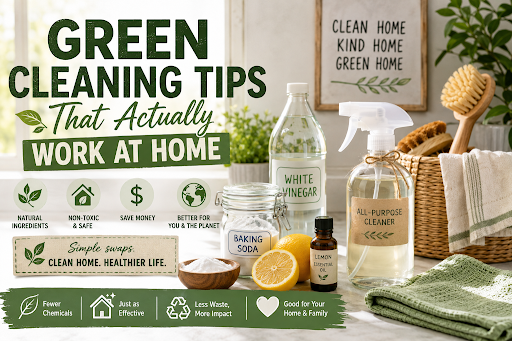
White vinegar. Baking soda. Castile soap. A lemon or two. Genuinely most of it. Throw in a couple glass spray bottles and some microfiber cloths, and that’s your whole natural cleaning products for home setup no cabinet of single-purpose sprays needed.
Vinegar cuts grease and handles a decent range of common household bacteria on its own. That surprised me the first time I looked it up. Baking soda takes care of odors and scrubs without scratching most things. Lemon just smells better than the alternative, and it cuts a bit of grease too. It also tones down vinegar’s smell, which on its own sits somewhere between salad dressing and regret.
An all-purpose cleaner you can mix in two minutes
This requires 1 cup of white vinegar, 1 cup of water, and ten or so drops of your choice of essential oil, such as lemon or lavender.Simply spray it out of a spray bottle. Use it to sanitize countertops, sinks and nearly any hard surface (except marble and granite – vinegar will dissolve natural stones over time).
This single recipe knocked out at least three bottles under my sink. Easy one to keep around, too, since none of the ingredients really go bad sitting in a cabinet for months.
Baking soda for the stuff that actually bothers you
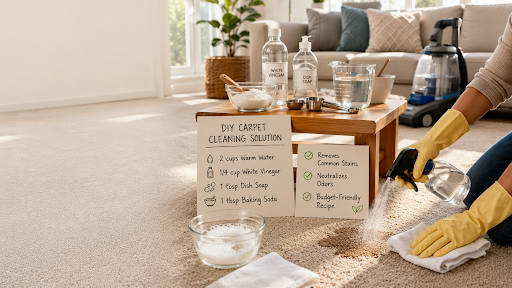
Sprinkle it right on stains, grease spots, anything that smells off.Give it fifteen minutes. Then scrub with a damp cloth afterwards. It will take off the marks on the stovetop, inside the refrigerator, bathtub rings, and the odor from your carpet if allowed to sit overnight before being scrubbed up and down with a carpet vacuum.
All that is required is to add in some water and it will instantly turn into a paste, a slightly fluid substance that can be used to remove dirt without scratching surfaces. Not much can I say about the old scouring powder I had under my kitchen sink.
Glass cleaner without the streaks
Two cups of water, a quarter cup of white vinegar, and a tablespoon of cornstarch. Weird combination?Works great anyway. Glass and mirrors come out properly streak-free. I fully expected the cornstarch to leave some kind of film behind. It just doesn’t, as long as you’re wiping with something lint-free instead of paper towels.
Reading labels the right way
Not everything marketed as green actually is. A bottle can slap “natural” across the front in big letters and still contain basically the same stuff as the bottle right next to it on the shelf. That word isn’t regulated the way most people think. What you actually want to look for is the EPA Safer Choice label. That one means the formula got checked against a real standard, not just approved by whoever wrote the marketing copy that day. The EPA Safer Choice program keeps a searchable list of certified products if buying beats mixing your own.
To get an idea of the contents in your average cleaner, EWG’s guide to cleaning products reviews hundreds of them and pinpoints certain chemicals that aren’t worth including in your products. Very useful in preventing you from falling for greenwashing.
Small habits that add up
Opting for washable rags rather than paper towels is an easy thing to do that reduces waste. Microfiber towels collect more dust than regular rags so it’s not really a compromise either way. Reusable spray bottles are better than constantly buying plastic ones.Some towns have refill shops now. Bring your own container for dish soap or laundry detergent, and that cuts packaging waste down even further if that’s a thing you care about.
You don’t need all of this at once, to be clear.Start by switching out what you use the most often, such as your all-purpose cleaner and dish soap, and you’ll gain most of the advantages without totally disrupting your entire cleaning routine all at once during the weekend.
Non-toxic doesn’t mean weaker
The common criticism about non-toxic cleaners is that they cannot clean effectively.. Baked-on grease. Bathroom grime. That category of problem. In my experience vinegar and baking soda handle most of it just fine, and for the stubborn stuff, letting the solution sit a few extra minutes before scrubbing usually closes whatever gap’s left.
Sustainable cleaning products have also just gotten better over the last few years—plant-based formulas that actually cut grease now instead of smelling nice and giving up halfway. If a homemade mix isn’t quite cutting it for something specific, that’s usually where a certified product earns its spot. No reason to reach for the harsh stuff out of old habit.
More breakdowns like this over at Clean Plate Guide—room-by-room routines built around these same ingredients, if you’d rather follow a full system than piece it together yourself.
It comes down to trusting a handful of basic ingredients over a wall of specialty bottles, at the end of the day. My under-sink cabinet has about four things in it now instead of nine. The house gets just as clean. Cleaner, actually, since I bother using half of them now instead of letting most sit there unopened. For more eco-friendly cleaning hacks worth building into a routine, Clean Plate Guide breaks down which combos work best room by room.
FAQ
Best green cleaning tips for beginners?
Vinegar, baking soda, and castile soap. That’s really it. Those three handle most of what comes up around the house, and you’re not buying a cabinet full of specialty sprays to do it.
Is vinegar safe on every surface?
No, skip marble, granite, or any natural stone. The acid eats into it over time. Fine on glass, counters, and most sealed surfaces, though.
Do natural products actually kill germs?
Vinegar’s got some antibacterial properties, but it’s not a registered disinfectant. Need an actual disinfectant? Look for EPA-registered products; plenty of those are plant-based now too.
How do I know a product is really eco-friendly?
Eco-friendly is trickier. “Natural” on a label means basically nothing, nobody’s checking that claim. What I’d actually trust: the EPA Safer Choice label, or just look the product up on EWG’s cleaning guide before buying.
Does green cleaning actually save money?
Usually, yeah. Vinegar and baking soda cost a fraction of several specialty cleaners combined and last way longer per use.