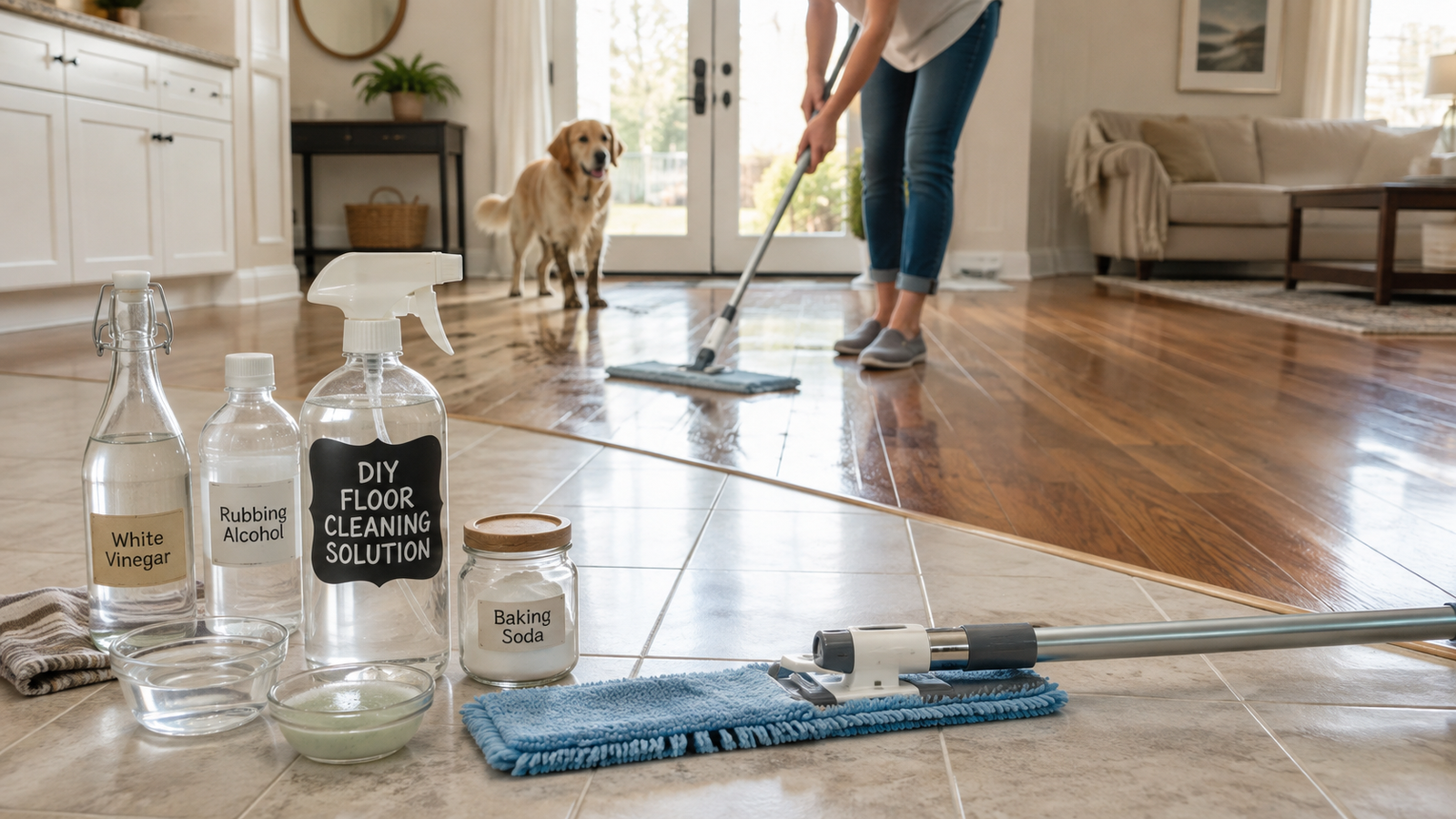
The back door is always home to my dog’s favorite place. With muddy paws and a straight path to that particular tile every time, usually about ten minutes after mopping the third occurrence happened last week. It was at that moment when holding the mop that I said to myself, “What am I doing spending money on this?”
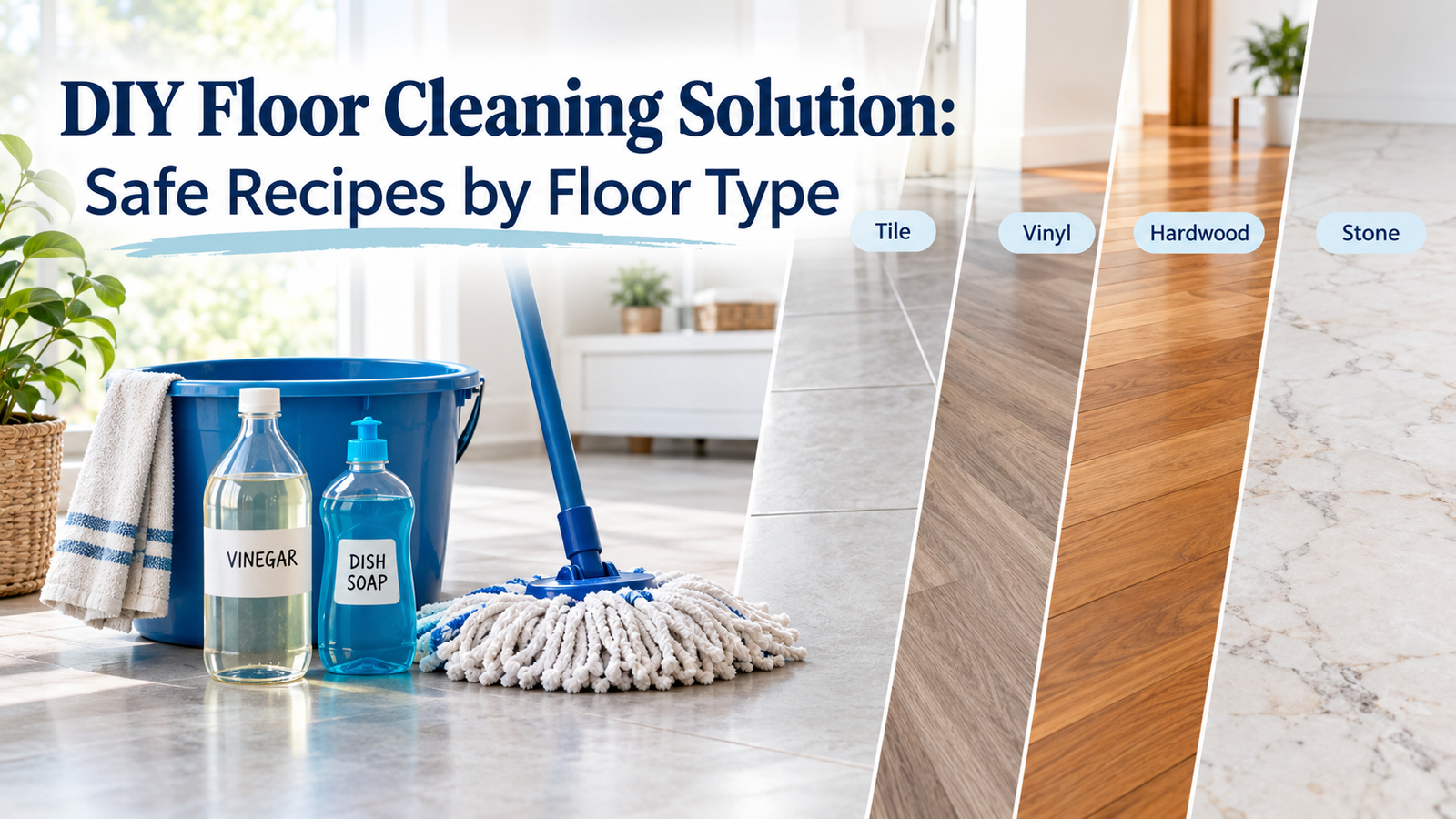
So I stopped. Instead, I went ahead and made my own “floor cleaning solution” and it was a surprisingly inexpensive mixture, given that this is a whole bottle of it that I make. Works the same. Maybe better, honestly, since I’m not breathing in whatever “fresh linen scent” actually means chemically.Tile, wood, vinyl, laminate and stone. You need to know which combo goes with which floor, because this is one of those areas where guessing wrong actually costs you.
What You Need
Vinegar. Rubbing alcohol. A basic dish soap, not the fancy kind. Warm water. A spray bottle or bucket. Microfiber mop if you have one, though a regular mop works too; it just doesn’t grab dirt the same way.
Quick thing before anyone starts mixing stuff in their kitchen sink. Vinegar and castile soap are enemies. The acid in vinegar breaks the soap back down into raw oil, and that oil smears across your floor looking worse than whatever you were trying to clean up. I found this out the hard way, wiping the same four square feet of tile over and over, wondering what I’d done wrong. Answer: castile soap. Use regular dish soap instead. Problem solved.
The Basic Recipe (Tile, Vinyl, Sealed Laminate)
Two cups of warm water. Half a cup of vinegar. Quarter cup of rubbing alcohol. Add a few drops of dish soap. Shake in a spray bottle. Spray and mop one section and then move on to the next.No rinsing.
Dries fast too, which matters if you’ve got kids who can’t be trusted to stay off a wet floor for more than ninety seconds. Add some lemon essential oil if you want; it cuts grease better than the floral stuff anyway. Ten drops is plenty.
Hardwood Is Different and Less Forgiving
Here’s the thing about wood floors. They hold a grudge. Too much water, too much vinegar, too often, and you’ll wear the finish down years before it should’ve worn down.
One gallon of warm water. One tablespoon of dish soap. Small sections. Towel dry if you’re paranoid about standing water, which I am, because I’ve seen what happens otherwise.
A teaspoon of olive oil brings a little shine back on sealed hardwood. A teaspoon. Not a tablespoon.
Grout Is the Real Problem With Tile
Everyone focuses on the tile surface. The surface isn’t the issue. It’s the grout lines where dirt hides and regular mopping does basically nothing.
A half cup of baking soda mixed in a bucket of hot water, along with a few drops of dish soap added to the mixture. Scrub the surface using a mop as you would normally. If the grout is stained grey or more severely, use an old toothbrush dipped into the mixture to scrub the lines.
The same floor cleaning solution can be used for the DIY bathroom cleaner as well. It removes soap scum and doesn’t scratch the surfaces like other abrasive powder cleansers kept in the cabinets underneath the sink.
Marble and Stone: Leave the Vinegar Out of It
One floor type where vinegar isn’t just unnecessary, it’s a mistake. Marble, travertine, any of those you name it, the acid will etch the surface. If it gets etched, you can’t buff your way back to shine. It is etched; etched for life, essentially.
One gallon of lukewarm water, few drops of pH neutral detergent, and stir to barely suds. Damp mop only, not wet. No standing water on the surface ever. Dry it after cleaning, or you will have water marks burned on the surface tomorrow.
Don’t Mix These, Seriously
Bleach and vinegar together make chlorine gas. That’s not a small thing. Enough to irritate your eyes and lungs pretty fast in a closed bathroom, according to the CDC’s guidance on safe cleaning practices. Bleach and ammonia, same story, different gas. If you used a store-bought disinfectant recently, rinse the floor and let it dry completely before switching to anything homemade. Not worth the coughing fit.
If you’d rather skip the DIY route entirely and just buy something with a safer ingredient list, the EPA’s Safer Choice program is a decent place to start looking before grabbing whatever’s cheapest on the shelf.
Actually Mopping the Floor
Sweep first. Or vacuum. Doesn’t matter which, just do one of them, because mopping over crumbs and pet hair just relocates the mess instead of removing it. Seems obvious written out like that, but I skipped this step for years.
Wring the mop well. S pattern. Start at the far corner, work backward toward the door, not the reverse, unless standing on a wet floor while it dries sounds like a fun way to spend your afternoon.Our natural home cleaning tips page has some mop and bucket picks if you’re in the market for new tools to go with any of this.
Grab whichever recipe fits your floor and try it this weekend. Worst case, you’re out maybe fifty cents in vinegar. Best case, that store-bought spray bottle sits in the cabinet collecting dust for good, which is honestly where mine’s been since March.
FAQ
Is it safe to make my own floor cleaner?
For the most part. There’s only one guideline that truly counts: never mix bleach with vinegar or ammonia. Anything else is wide open for experimentation.
Can I use the same homemade floor cleaner on all the floors of my house?
It’s here that most people run into trouble. No. Vinegar’s great on tile and vinyl, terrible on marble, and not great long-term on waxed hardwood either. Match the recipe to the floor, not the other way around.
How often should I mop?
Once or twice a week handles most homes fine. If you’ve got a dog dragging mud in daily like mine, you’re realistically looking at three times, sometimes more depending on the weather.
Does homemade floor cleaner disinfect anything?
Not really, no, not the way bleach does. These formulas are good at picking up dirt and cleaning greasy areas. Disinfection is another task altogether and for that you need an EPA-registered cleaner.
Will the vinegar hurt my laminate flooring?
Most likely not if it’s sealed. The greater danger is standing water that gets in between the joints. Just make sure your mop isn’t soaked.