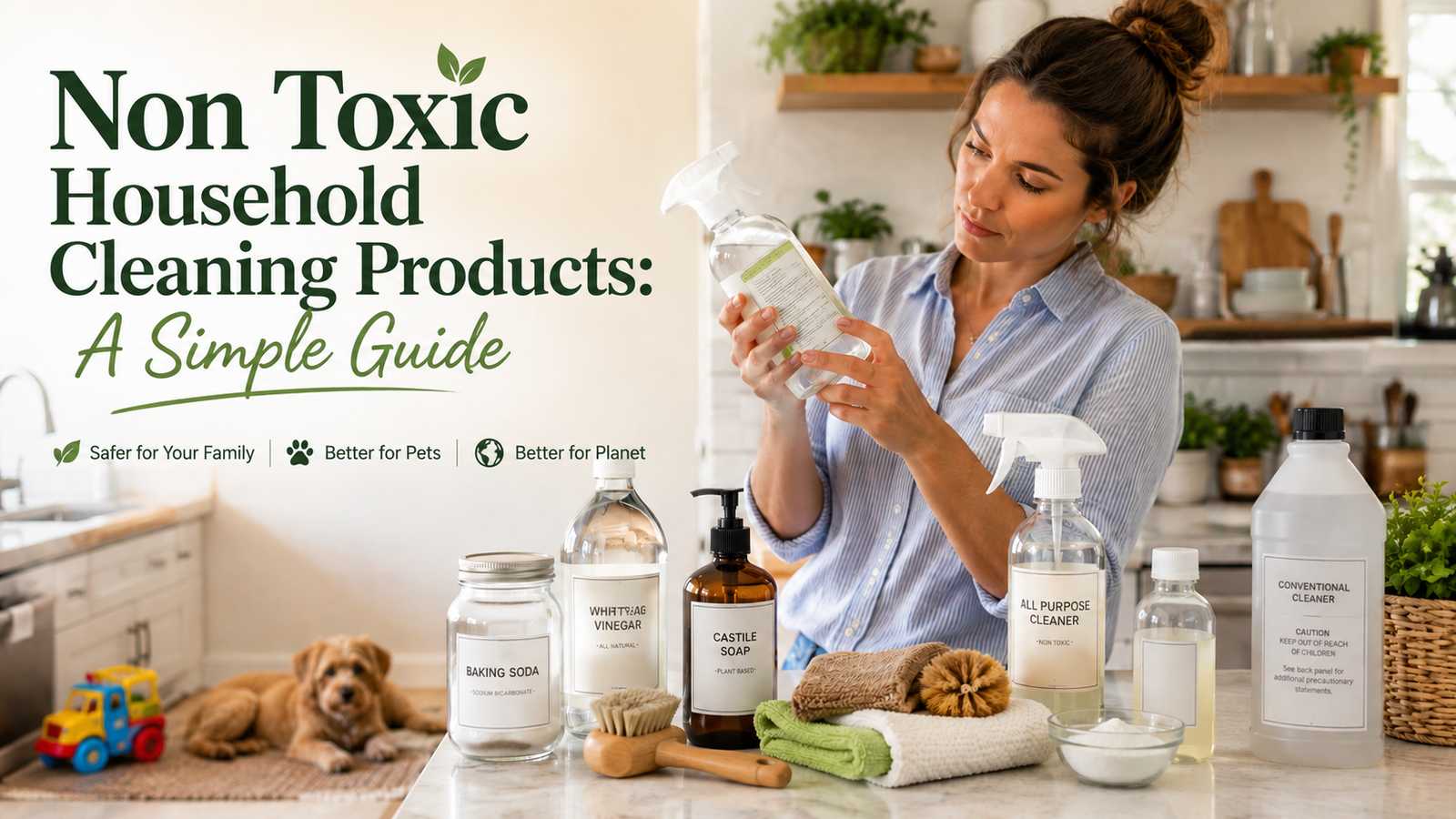
My daughter used to crawl straight through a floor I’d just mopped. Didn’t matter if it was still wet. Hands right in it, then straight into her mouth two minutes later, like clockwork. I flipped the bottle over one day just to see what she was actually eating.
I couldn’t pronounce half of it. Not because I struggle with big words, I don’t, but because these weren’t words so much as strings of letters somebody in a lab coat came up with. Sodium laureth is something. A fragrance blend that didn’t list a single ingredient inside it.
So I went down a rabbit hole on non-toxic household cleaning products, expecting it to be complicated. It mostly isn’t. Took me longer to find good information than to actually understand it once I did.
What Actually Makes a Cleaner Toxic
Cleaners fight grease and germs with strong chemicals. That part makes sense; dirt doesn’t come off with wishful thinking. But some of those chemicals do more than clean. Bleach fumes can burn your throat if you’re scrubbing a small bathroom with the door shut, which, who doesn’t do that? Ammonia’s rough too. And fragrance, don’t get me started on fragrance, since companies don’t have to tell you what’s actually in a scent.
None of this means you need a chemistry degree to shop smart. You just need to know what to skip.
Warning Signs Worth Knowing
Danger and poison, obviously, walk away. But caution and warning matter just as much even though they sound softer. All three of those words mean the product barely passed a safety test. Barely.
Fragrance alone on a label, nothing else next to it—that’s the one that gets me. Companies can bury dozens of chemicals under that single word and never explain a thing. EWG’s Guide to Healthy Cleaning lets you search almost any brand and see what’s actually hiding in there before you buy it.
How to Read Cleaning Product Labels the Right Way
Ignore the front of the bottle entirely. That’s marketing, plain and simple. Flip it around. That’s where the truth lies – on your back.
Seek out the complete list, rather than three main ingredients advertised in large print while all others are hidden in small print.A company that lists everything usually has nothing to hide. One that only shows you the good stuff? Ask yourself why the rest isn’t there.
Short lists tend to be a good sign, generally speaking. Long ones packed with words you’d need a dictionary for, not so much.
Best Non-Toxic All-Purpose Cleaner, Store-Bought or DIY
Two roads here. Buy something ready-made, or mix it yourself in five minutes.
Buying route, look for the EPA Safer Choice label. This isn’t some marketing badge a company slapped on their own bottle. It’s a government review; every single ingredient is checked before that logo ever shows up. EPA’s Safer Choice program has a searchable list if you want to browse before your next grocery run.
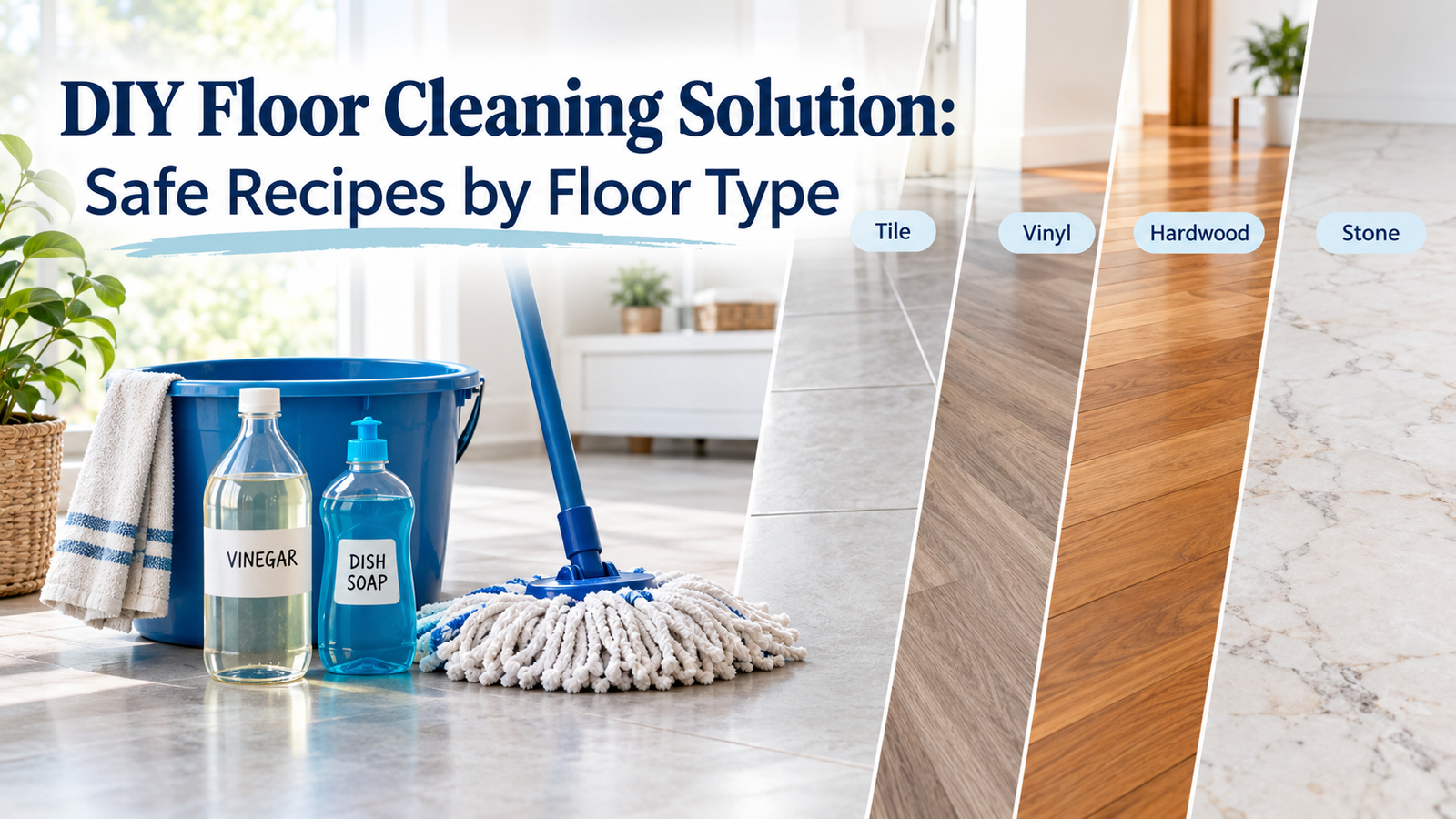
Mixing route, here’s my go-to. Two cups water, half a cup white vinegar, and a few drops of dish soap, shaken up in a spray bottle. Handles counters and sinks fine, no chemical smell lingering after. Got more specific recipes by floor type in our DIY floor cleaning solution guide if wood or stone floors are what you’re dealing with.
Safe Cleaning Products for Kids and Pets
Children touch things all around the place, and within two seconds are touching their face. Animals lick the floor as part of their daily routine. This is where it counts.
Skip bleach and ammonia anywhere your kids play or your dog naps. Baking soda paste with a little water handles most kitchen messes without any of that risk hanging over it. On floors, plain vinegar and water dry fast, which matters, since fast drying means less window for curious hands to land in it while it’s still wet.
Need real disinfecting, not just a wipe down? Look for an EPA registration number specifically. That means someone tested whether it actually kills germs instead of just sounding like it might.
Simple Swaps You Can Make Today
Nobody needs to replace every bottle under the sink this weekend. Start with whatever you reach for most.
All-purpose spray first, since that’s the one touching counters where food landsThis comes after the bathroom cleaner, but the smaller room, with less airflow, makes it worthwhile to switch earlier on. These can be acquired later on if you plan on easing yourself into this without totally remodeling the house.
Baking soda, white vinegar, and liquid castile soap. Here are your basic cleaning materials and everything can be stored in one shelf inside your cupboard.
Starting Small Without Losing Your Mind
Pick one room. Just one. Most people start in the kitchen since that’s where food and cleaning chemicals sit closest together, which always felt like an odd design choice to me honestly.
Once that room feels normal, move to the next. There’s no rule saying everything gets thrown out today or even this month.
Our guide to natural home cleaning tips has exact ratios by surface if you want the full breakdown, plus a warning list of what never to mix together.
A cleaner counter today still counts as a win. Even if the rest of the house takes a few more months to catch up.
FAQ
Are non-toxic household cleaning products actually as effective as regular ones?
For everyday stuff, yes, pretty much. Vinegar and baking soda cut grease and soap scum just fine. Heavy disinfecting after someone’s sick is really the only time you need something stronger.
What ingredients should I avoid most?
Bleach, ammonia, and anything just labeled “fragrance” with nothing else next to it. Those three cause most of the skin and lung irritation people run into.
Is homemade cleaner actually cheaper?
By a mile, usually. A vinegar and water batch runs you pennies. A store bottle runs five dollars and up, sometimes a lot more depending on the brand.
Will non-toxic cleaners cut through tough kitchen grease?
Mostly, especially with dish soap mixed into the vinegar. For grease that’s really baked on, baking soda paste and some scrubbing gets it there.