Juice on the kitchen floor. Muddy paws in the hall. A mop that’s been sitting in the closet since spring. Sooner or later you’ll Google a DIY floor cleaning solution and land on ten blogs that all say “just use vinegar.”
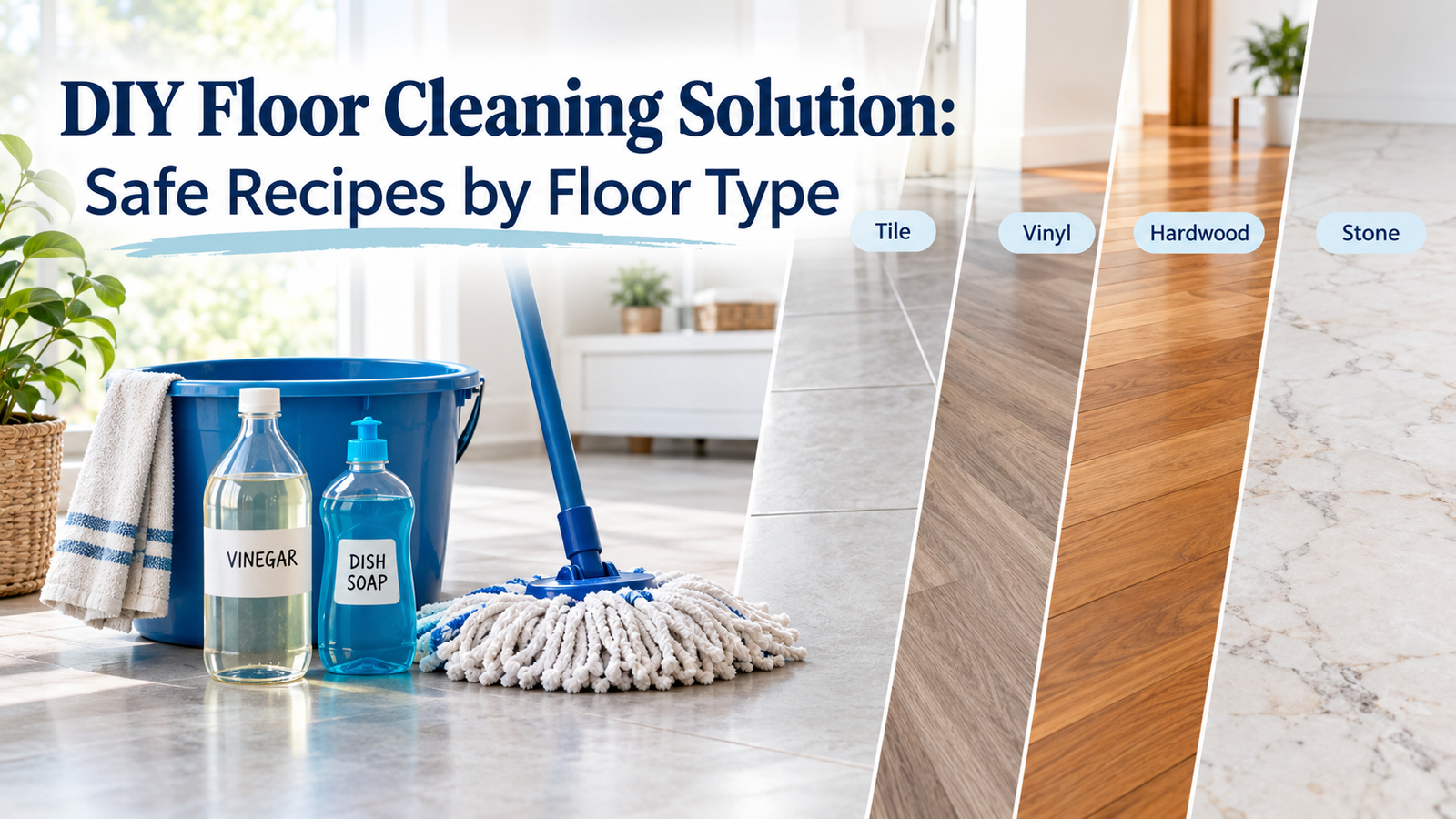
Here’s the problem. Vinegar is excellent on some floors and rough on others. Before mixing any solutions, please determine the type of flooring you are working with.
What Makes a Good DIY Floor Cleaning Solution??
Short answer: less than you think. Warm water, one active ingredient, done. Some recipes online throw six things into one bucket (vinegar, oil, lemon, soap, and on and on), and honestly, they mostly leave a mess behind.
Why does the ingredient matter? Floors have finishes, and cleaners have an acid level called pH. Vinegar is an acid. Dish soap is mild. Bleach and ammonia are strong. Choose the wrong combination and you’ll be left with cloudy spots and sticky residue that will never seem to clean itself.Sweeping/vacuuming is the best practice over any formula. Grit under a wet mop works like sandpaper.
Homemade Floor Cleaner Recipe for Tile and Vinyl
Sealed tile and vinyl can handle the classic vinegar floor cleaner. Here’s the whole floor cleaner recipe:
- 1 gallon of warm water
- 1/2 cup of white vinegar
Stir it, dip the mop, wring it out well, and go. Let the floor air dry, or towel it off if the company’s coming. Vinegar is decent at breaking up the white, chalky haze that hard water leaves behind. Test a hidden corner first, and keep this to sealed floors only.
It’s about the simplest DIY floor cleaner for tile there is. For more easy ideas like it, browse the DIY floor cleaning solution guides at Clean Plate Guide.
DIY Floor Cleaner With Dish Soap for Greasy Floors
Kitchen floors get greasy. Grease is just what dish soap is made to remove; therefore, only a few drops in a gallon of hot water are all that is needed. The area by the stove tends to be the one that suffers the most, so start there with a wet cloth and a drop of soap.
Few. Drops People apply an abundance and end up with a murky and sticky floor. When your floor becomes sticky after cleaning, it probably has an excess of soap that is causing it. Dampen a piece of cloth with water and wipe the floor down. Same DIY floor cleaning solution logic, different ingredients.
DIY Floor Cleaner for Hardwood: Read This First
Now the touchy one. Lots of blogs say to mop wood with vinegar and water. The National Wood Flooring Association (NWFA, at woodfloors.org) says don’t. Vinegar is acidic and can wear down the finish, and the group also warns against steam cleaners and standing water on wood.
My take? Skip the homemade stuff on hardwood. Dust mop or vacuum. Then use a microfiber mop that’s barely damp, wrung out hard, with plain water. Call or email whoever made your floor and ask what they approve. It takes five minutes and could save you a refinish. Not sure if your floor is solid or engineered wood? Same rule. Ask the maker.
Wax or oil finish? Even pickier. Water-based cleaners are off the table. And if you’ve used vinegar for years with no problems, okay, don’t panic. Just know that a DIY floor cleaning solution with acid in it can dull a finish over time.
Natural Floor Cleaner Choices for Stone Floors
Marble, travertine, and limestone. These are the floors that punish experiments. Acid eats the surface, which leaves dull spots (called etching) you can’t wipe off. Vinegar does it. So does lemon juice, even though both feel like a natural floor cleaner.
What’s safe? Warm water. Or a few drops of mild dish soap in warm water. A pH-neutral stone cleaner from the store beats both. Granite copes with acid better than marble, but its sealer can still wear down, so I’d play it safe there too.
Not sure what your stone is? Ask the installer or dig up the paperwork. Guessing isn’t worth a repair bill. And blot spills right away.
What Not to Use on Floors
A few rules apply to every floor.
Under no circumstances should bleach be combined with vinegar or ammonia. According to the Missouri Poison Center, chlorine gas is produced by combining bleach and an acid such as vinegar. Most people don’t do it on purpose. They clean with bleach, then grab the vinegar to get things “extra clean.” Don’t.
Skip steam mops on wood. Skip “shine” products too, since they can add a coating instead of cleaning anything. And I’d pass on recipes with olive oil or vegetable oil in them. An oily film on a floor you walk on? No thanks. A DIY floor cleaning solution shouldn’t leave your socks slippery. Keep kids and pets off until the floor is dry, and open a window if any smell bothers you.
How to Mop So your DIY floor cleaning solution works
You can have a perfect recipe and still end up with streaks. It’s usually technique. Test your mix somewhere hidden, like inside a closet. Use two buckets if you can, one with cleaner and one with clean rinse water, so you’re not pushing dirty water around. Change the water once it turns gray, because dirty rinse water just puts the grime back down.
Wring the mop until it’s just damp. Work in small sections. Dry up quickly, since standing water is hard on most floors. Nothing fancy, but it helps every DIY floor cleaning solution do its job.
Pick the Right DIY Floor Cleaning Solution and Get Mopping
Match the mix to the floor. Vinegar and water for sealed tile and vinyl. A few drops of dish soap when it’s greasy. Plain water for wood and stone, unless the maker says otherwise. The best DIY floor cleaning solution is the one your floor can actually handle. For more simple guides, keep browsing DIY floor cleaning solution tips at Clean Plate Guide. If something goes wrong, stop and rinse the spot with plain water. Now go mop something.
DIY floor cleaning solution FAQ
What is the best DIY floor cleaning solution?
It depends on the floor. White vinegar can be used on sealed tile and vinyl in the amount of 1/2 cup per gallon of warm water. Greasy floors may require just a few drops of dish soap in the same volume of warm water. Hardwood and stone should be tested before application of vinegar.
Can I use vinegar on all floors?
No. It can dull hardwood finishes and etch natural stone like marble. It’s mainly for sealed tile and vinyl.
Is a DIY floor cleaner safe for hardwood?
Be careful. The National Wood Flooring Association advises against vinegar and steam on wood. A dry mop and a barely damp microfiber mop are the safer bet.
Can I mix bleach and vinegar?
Never. The mixture produces chlorine gas, which is poisonous. Use each cleaning product separately and then rinse the surface using only water.
How much dish soap should I use in a floor cleaner?
A few drops per gallon of warm water. More than that can leave a sticky film.