Okay, real talk. Half the cleaning aisle smells like a chemistry set, and you’ve got a kid who eats crackers off the floor. Or a dog. Or both. So yeah, you’re wondering about non-toxic household cleaning products. Fair. Here’s what I’d tell a friend: how to read the label, what to whip up at home, and the few mixes that can really hurt you.
Start with the label, not the bottle front.
“Natural.” “Green.” “Non-toxic.”They look official, but they are just words that some company has chosen. I would not rely on those. Flip the bottle around. If you have to choose safe cleaning products, what the ingredients say is much more revealing than a green leaf at the front.
If you want one thing to look for, make it the EPA’s Safer Choice label. Before a product can wear it, EPA scientists check every single ingredient, even the tiny ones. There’s a fragrance-free version too, which helps if perfume makes your head pound. And natural cleaning products? Some are great. Read their ingredients too, same as anything else.
Why this matters at home
Where do kids and pets hang out? Low to the ground. They touch the floor, then their mouths. Dogs lick paws. Cats clean themselves after walking over counters. And in a tiny bathroom with the door closed, strong fumes just sit there and sting your eyes.
You don’t need fancy stuff to fix that. Safe cleaning products for kids and pets can be cheap and plain. I’d also skip the big cabinet purge. Just replace the two things you grab most, which for most people are the all-purpose spray and the dish soap. See how you like it.
Think about timing too. Clean with the kids and pets out of the room. Then allow time for the floor to dry before people walk on it again. Let some fresh air in if you can by opening a window. The power of the air does a huge amount of the cleaning for you. Using non-toxic household cleaners is a great beginning, but little things like this one take care of the rest.It takes about ten seconds and clears away leftover residue.
What you can make from your pantry
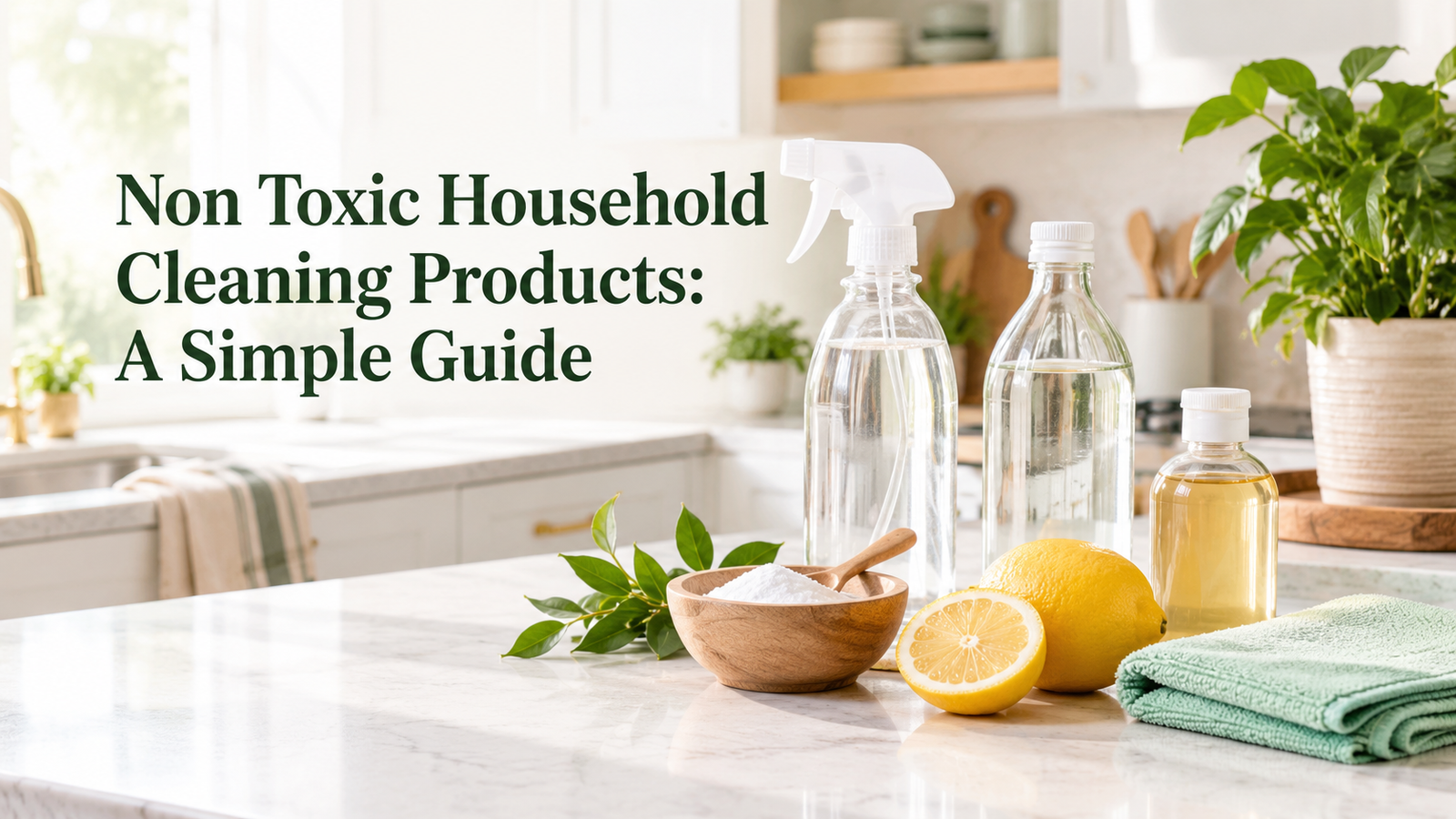
White vinegar does all the hard work. Mix equal parts vinegar and water in a spray bottle to wash glass and countertops, and even remove soap scum. Baking soda is abrasive, yet very mild, and thus can scrub sinks and bathtubs without causing much scratching. Castile soap is a type of liquid soap made from plants.Homemade non-toxic household cleaning products cost pennies. That part makes me happy.
Some catches, though. Vinegar and baking soda fizz when they meet, then they cancel each other out. Use one, then the other. Never put vinegar on granite or marble, since it dulls the stone. And vinegar isn’t a proven germ killer. If someone’s sick at home, use a disinfectant registered with the EPA and follow its label.
You can find more ideas on non-toxic household cleaning products over at Clean Plate Guide.
Where to use it first: kitchen and bathroom
Those rooms get the grimiest, so you’ll see a change right away.
Kitchen first. Spray counters with the vinegar mix (not stone).For the greasy stovetop, make a paste with baking soda and a touch of water, leave it for ten minutes, then clean off. For the crusty microwave, put water mixed with lemon slices into a container, cook for approximately three minutes, and allow the steam to do its job.
Now move to the bathroom. Sprinkle baking soda onto the bathtub, wash it down, and rinse it out. A rag that has been soaked in vinegar and tied to the faucet will take away the spots from hard water after thirty minutes. To clean the toilet, just place baking sodaCheap, and it works better than you’d think. That’s vinegar and baking soda cleaning for you.
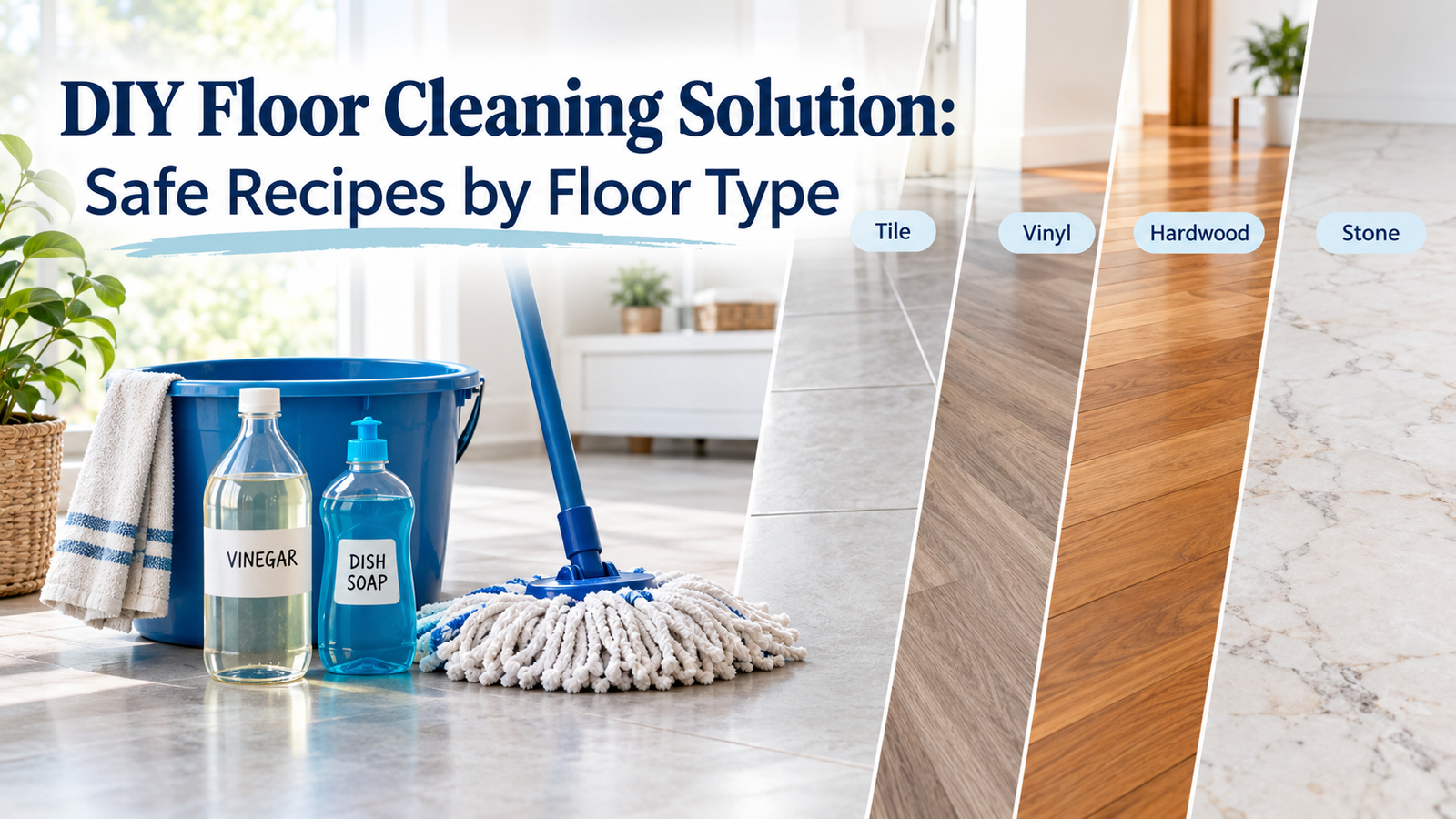
Quick extras. Wipe windows with the vinegar mix and a dry cloth or old newspaper. For wood floors, use a barely damp mop with one drop of castile soap, since too much water can warp boards. Check your floor maker’s advice first.
Buying instead of making
Not everyone wants to mix stuff in the kitchen. Totally okay. A short ingredient list with mostly familiar words is a good sign. So is the Safer Choice mark. Pick fragrance-free if scents make your kids itchy. With cats at home, watch out for essential oil sprays, because some oils aren’t safe for them. Your vet can tell you more.
Good non-toxic household cleaning products say which surfaces they’re for and how to use them. If the label is vague, I’d put it back. The best non-toxic all-purpose cleaner is just the one you’ll use, so buy a small bottle first. A huge jug sounds like a deal until you never finish it.
The mixes that can really hurt you
This part’s serious. Bleach plus ammonia makes toxic gas. Bleach plus vinegar does too. Even hydrogen peroxide and vinegar in one bottle is a bad idea, because together they can form a harsh acid.
Keep each cleaner in its own bottle with the label on. Open a window while you work. If someone swallows a cleaner or breathes in fumes and feels sick, call Poison Help at 1-800-222-1222 or go to poison.org. And store even gentle, non-toxic household cleaning products up high, out of reach.
Eco-friendly cleaning supplies, no pressure
You don’t have to go green all at once. That’s a fast track to quitting. Try washable cloths in place of paper towels. Grab refills when you can, so there’s less plastic. Rub half a lemon and a pinch of baking soda on a cutting board. Pair that with non-toxic household cleaning products and you’ve covered most of the house. If a swap annoys you, drop it. Eco-friendly cleaning supplies should make life easier, and a bottle of dish soap with a clean rag handles more than you’d guess.
Conclusion: pick one swap.
Choose one product this week. The all-purpose spray is a solid pick. Read the label, keep it out of reach, and don’t mix it with anything. That’s most of what using non-toxic household cleaning products comes down to. And when you want more, non-toxic cleaning guides are waiting at Clean Plate Guide.
Frequently asked questions
Do non-toxic cleaners work as well as regular ones?
Often, yes, for everyday dirt. EPA says Safer Choice products have to perform about as well as regular ones. For real germs, use a registered disinfectant.
Are natural cleaning products always safe?
No. Natural is not always synonymous with safe. There are some plant ingredients that could irritate the skin or affect pets.
Is vinegar safe to clean with?
On most hard surfaces, yes. Skip natural stone, and never mix it with bleach.
How should I store cleaning products?
In their original bottles, up high or locked, away from food. Even the gentle ones.