
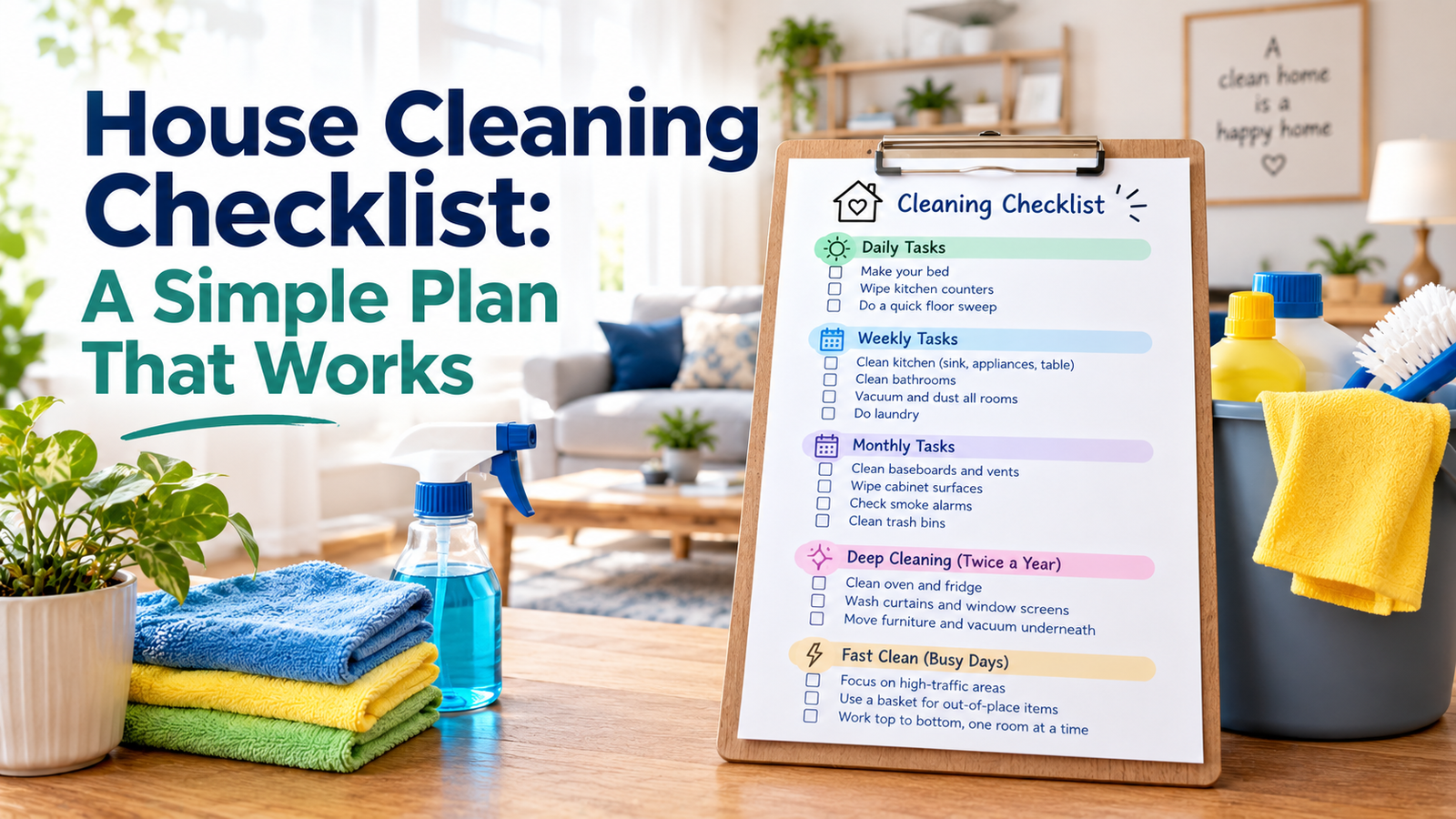
Most people don’t clean badly. They clean randomly. You clean the countertop on Monday, remind yourself about the bathroom on Thursday, and then spend all of Saturday cleaning the shower that has gotten really gross somewhere around week three. The house cleaning checklist solves this by giving you an order to follow, and you no longer need to think about it and just do the next thing. This one I have divided into daily tasks, weekly tasks, and monthly tasks, along with some deep cleaning tasks. Why You Need a House Cleaning Checklist Without a list, you clean what you can see, and nobody sees the top of the fridge. So nobody cleans it. A written plan catches what your eyes skip, like the microwave, the baseboards, and the lid of the trash can (gross, but true). It also keeps the work small. Ten minutes a day is easier to face than a four-hour weekend marathon, and I’d take the ten minutes every time. Plus, having a list gives you something to cross off, which feels oddly great. Daily House Cleaning Checklist Ten or fifteen minutes total, and that’s with a podcast on.Make your bed (yes, seriously). One spray, one rag, maybe one minute. Notice what is not on this list? Scrubbing and rearranging furniture are not part of daily chores, since the weekly chore list will deal with that. The daily chores stop things from becoming messy.If you do only one thing on this list, it’s the kitchen. If you keep the kitchen neat, the rest of the house will also appear tidy–even if tons of laundry is scattered about in your living room. Weekly House Cleaning Checklist by Room Pick one day, or split the jobs across a few; whatever actually survives contact with your week. Just go room by room instead of bouncing around, or you’ll end up carrying the same spray bottle back and forth for no reason. Start in the kitchen. It’s the biggest job, so get it out of the way first. Scrub the sink, wipe the fronts of the appliances, and steam the inside of the microwave with a bowl of water so the gunk wipes right off instead of needing to be scraped. Toss whatever’s past its date in the fridge while you’re in there. Mop last, always, or you’ll just be walking dirt back onto a wet floor. Bathrooms come next, and nobody’s volunteering for that one. Toilet, sink, tub or shower, mirror. Fresh towels. Then mop, same rule as the kitchen. Bedrooms are honestly the easy part by comparison. New sheets, dust, vacuum, done. Living areas get the same treatment, plus a quick fluff of the couch cushions so the room doesn’t look lived-in beyond repair. If you want more ideas, our cleaning checklist guide goes deeper into each room. Monthly House Cleaning Checklist Monthly jobs are the ones you can safely forget for a few weeks, which is exactly why they need their own list. Vacuum under the couch and the beds. Clean the surfaces of the cabinets, particularly those around the stove. Don’t forget to clean the trash bins as well. This area also harbors all those objects that slowly deteriorate, such as the vent and the window tracks. Test the smoke alarms while you’re up there. It takes thirty seconds. Put these on a reminder in your phone. If a task isn’t on a reminder, it gets skipped. I’ve never met anyone who remembers the washing machine on their own. Deep Cleaning Checklist for Twice a Year Every six months, the house deserves something more than just a spruce. Clean the drapes. Scrub the oven. Unplug the refrigerator and the sofa and take a look in there (it’s going to be dust and maybe some sock). This is the step that gets skipped, and I understand why. No one gets out of bed looking forward to scrubbing the oven. But do it, and while you’re there, clean the window screens and the spots behind the stove.Spring and fall are the typical choices, but you can pick any two times you like. Just make sure they’re actually ones you’ll follow through on. How to Clean a House Fast No time to spare? Set a timer for 20 minutes and start at the front door. Go around the house one way only. The moment you start doubling back, 20 minutes turns into an hour, and you know it. Take a basket with you, and anything sitting in the wrong room goes in it: the mug on the bookshelf, a kid’s sock, whatever. Sort it out when the timer’s done. Company in an hour? Don’t bother with a deep clean. Clear the clutter off surfaces, wipe the bathroom sink and mirror, get the trash out, and vacuum the hallway, since that’s the part they’ll see. Nobody opens your closet. Shut the door. In each room, work top to bottom. Ceiling fan, then shelves, then floor. Dust comes down, so if you vacuum first you’ll end up vacuuming again. Honestly, I think that matters more than which cleaner you use.And quit trying to do it all in one go. A fast clean of the busiest rooms beats a perfect clean you never start. Cleaning Safety Basics Quick safety tip – because how much help is a checklist if it gets you to the emergency room? One of the most essential pieces of information is that you should always read the label prior to using any new product. You must always respect the instructions on the label, as stated by the EPA, and regularly air out the location being cleaned. You shouldn’t mix cleaning products and disinfectants. KING 5’s fact check points out that the CDC and state health departments all warn against mixing bleach with other cleaners. Gloves on, window open, one product at a time. And cleaning isn’t the same as disinfecting. Cleaning removes the dirt from things. Disinfecting removes the germs from things, but it will do its
Deep Cleaning Tips for Home That Actually Get Things Clean
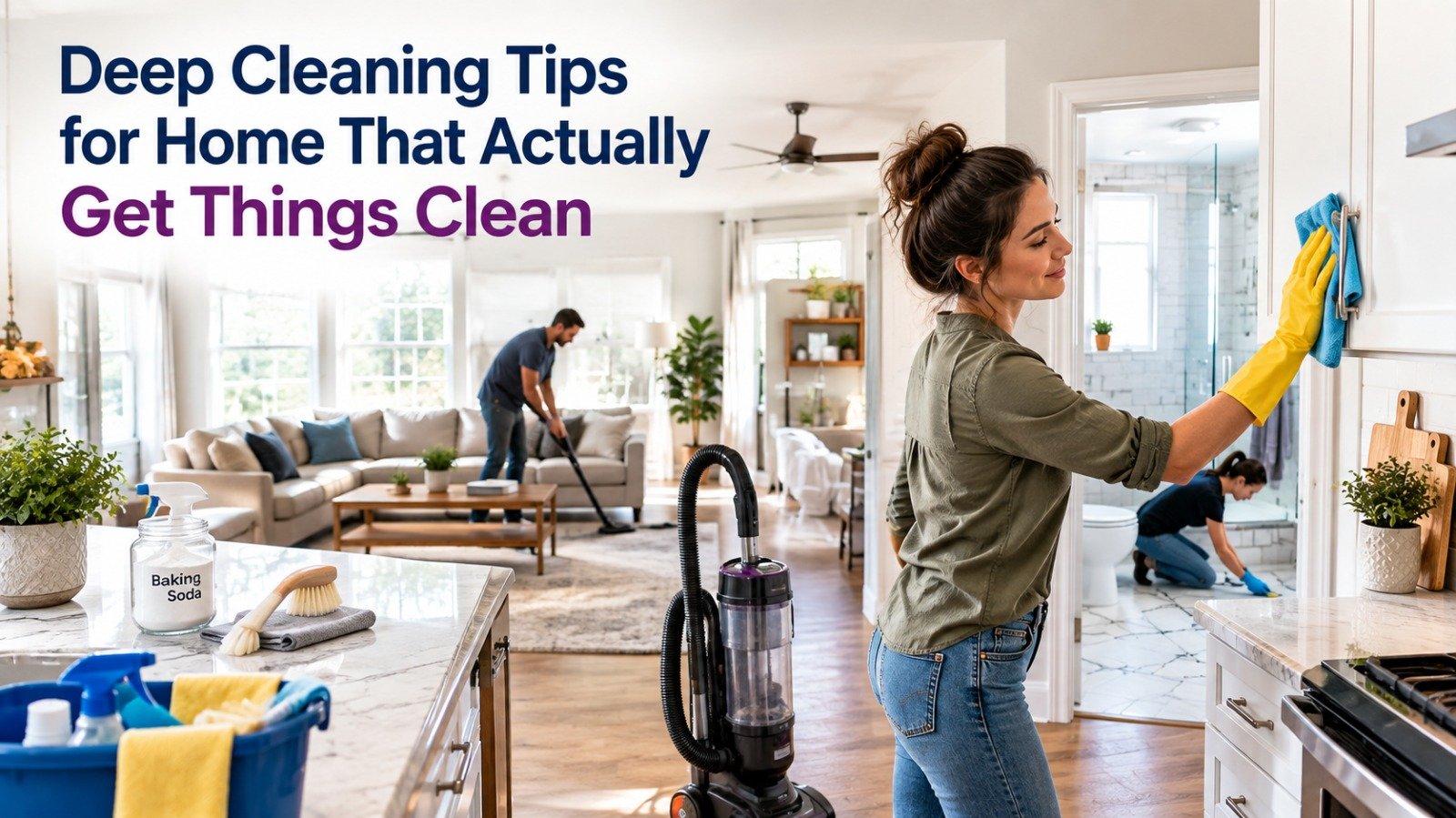
There’s regular cleaning, and then there’s the kind where you move the couch and immediately regret it. I did that a few months back, pulled the sectional off the wall to vacuum behind it for probably the first time in two years, and found a sock, three old receipts, and enough dust to build a second couch out of. That’s basically the gap between wiping counters on a random Tuesday and actually deep cleaning a house. Most articles about deep cleaning tips for home just dump every task in a house into one list and call it done. That’s not really that helpful on its own. What truly makes a difference is the understanding of what order to approach tasks in mind such as a few spots where people don’t usually focus on, or when you can pause instead of worrying about being perfect even on Saturday. Deep Cleaning vs. Regular Cleaning Regular cleaning helps maintain a house in good condition in general. For instance wiping the kitchen countertops, vacuuming the spots visible on the floor as well as washing the dishes are the examples of regular cleaning. Deep cleaning is a different story. This is about cleaning areas that never really get touched by regular cleaning, e.g. the area behind appliances, inside ducts, grout, and places that are seldom even seen. Do a real deep clean twice a year, and you’re already ahead of most households, honestly. Once a season is over, it’s not a bad habit to have, though if you’ve got allergies or pets shedding constantly, it’s not a bad habit to have. Start With a Plan, Not a Room The instinct is to just dive into whatever looks worst. Don’t, though. Work top to bottom, back to front, room to room; dust falls, so cleaning floors before dusting shelves just makes you clean floors all over again an hour later. The same principle applies throughout the house as well; start in the messiest room, where the task will be longest and most difficult, when you’ve got plenty of energy, then move to the easier areas when you start getting tired. The rough checklist below is better organized by room than one big list, since it actually allows you to finish somewhere rather than having six jobs a third done simultaneously. Deep Clean Kitchen: Where Most of the Grime Actually Lives The kitchen is the dirtiest room in the house, but most of its dirt stays hidden from you. Pull out the stove and fridge and clean under and behind them; it is always the dirtiest thing in the entire process but surprisingly, also the most rewarding when you’re done. Use white vinegar and water solution to clean an empty dishwasher on a hot cycle and remove soap scum and mineral deposits. Also, wipe the fronts of your cabinets; there’s grease build up there from cooking and you probably aren’t even aware of it.Pull the fridge shelves out and wash them properly instead of wiping around whatever’s still sitting in there. And if the inside of your oven hasn’t been touched this year, do it now, before anything actually starts burning onto it. Deep Clean Bathroom: Grout, Fixtures, and the Stuff Behind the Toilet Bathrooms look clean fast and turn gross fast, which is exactly why they need this more than most rooms do.Grout is normally the biggest culprit using a hard brush and some baking soda that is mixed into a paste should do the job for the most part, while a dilution of bleach can be used on tough spots, but never combined with any product containing ammonia or vinegar. If you can remove your shower head, soak it in vinegar to dissolve any mineral buildup. Very few people do this, but it can make a bigger difference to your water pressure than you would imagine.Wipe down the exhaust fan cover too, since it collects dust nobody thinks to look up and check. And yeah actually move the toilet brush holder and clean underneath it. Everybody skips this one. Every single time. Bedrooms and Living Areas Flip the mattress if it’s a type that allows for it; vacuum it either way. Mattresses hold way more dust than most people would guess.Clean the pillows themselves in addition to the pillowcases when you’re able to according to the care label. Make sure you clean the undersides and backs of furniture you don’t move often, as well as the baseboards, which accumulate layers of dust and hair unnoticed. Ceiling fans and light fixtures get forgotten constantly since they’re above eye level, but a fan spinning with a thick layer of dust on the blades is mostly just redistributing that dust around the room every time it turns on.. The CDC’s page on dust mites and indoor allergens is a useful reference if you’re wondering why mattresses and pillows are worth the extra effort. Windows, Blinds, and the Stuff You Look Through Without Seeing Wipe out the window tracks, which collect more grit than the actual glass does.Dust the blinds using either a microfiber dusting wand or an old sock wrapped around your hand the most boring part of deep cleaning but it sure makes a big difference later on when you see how much light is coming in after that. Also wash the drapes if they can be machine washed they usually aren’t until they become noticeably discolored. A Reasonable Order for a Whole House Cleaning Routine Trying to do an entire house in one day is rough unless you’ve got extra hands helping. A more realistic whole-house cleaning routine spreads it out over a weekend, maybe even a couple of weekends: Trying to power through it all in one go usually means the last room or two ends up rushed, which kind of defeats the point of doing it at all. When to Actually Deep Clean Spring cleaning tips get all the attention every year, but the calendar doesn’t actually care what season it is. A
The Deep Cleaning House Checklist That Actually Gets Finished
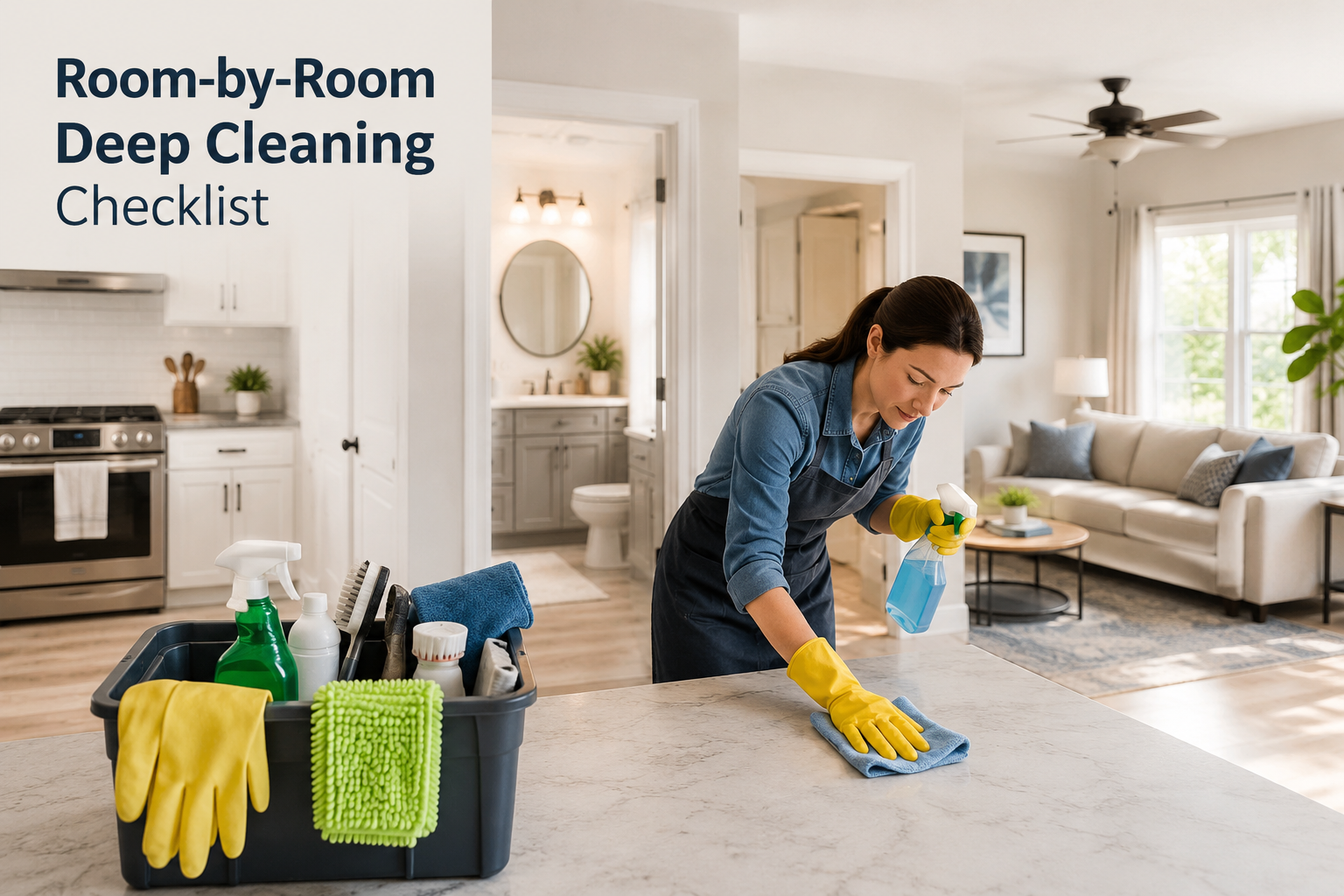
For years I thought deep cleaning meant tackling the whole house in one long Saturday. It never worked. I’d start strong in the kitchen, run out of steam somewhere around the bathroom, and give up near the hallway closet with cleaning supplies scattered across three rooms and nothing actually finished. A deep cleaning house checklist fixes that. Not by magic, just by breaking the job into pieces small enough to survive an actual afternoon. Work room by room and you always know what’s done and what’s still waiting. This guide covers what to clean, what to grab before you start, and how often you genuinely need to bother. Works whether you’ve got a full free weekend or one hour after the kids finally go down. Deep Cleaning vs. Weekly Cleaning Weekly cleaning keeps a house looking decent. Deep cleaning is what actually makes it clean. That gap matters more than most cleaning guides bother explaining.Weekly stuff is what you see every day. The process of wiping down counters, pushing the vacuum around the living room, and throwing the garbage away. It is quick; it has to be. You do it weekly, and it shouldn’t take up three hours of your time every single time. Deep cleaning is the act of tackling the things that you can’t see or ignore seeing. Grout lines. The back of the fridge. Baseboards that have been collecting dust since nobody remembers. None of it gets dirty overnight, which is exactly why it’s so easy to ignore for months, until one day you actually look and realize how bad it’s gotten. Here’s the thing most guides skip over: a real deep cleaning house checklist isn’t weekly cleaning with extra steps tacked on. Weekly cleaning is upkeep. Deep cleaning is catching up on everything upkeep never touches. If you haven’t done a real one in a while, it’ll take longer than you’re expecting. A full house done properly can eat an entire day. One room on its own usually runs one to three hours, depending on how long it’s been ignored. Been over a year since your last real deep clean? Don’t try to knock out the whole house in a single day. Split it. Two rooms this weekend, two more next. There’s no expiration date on a deep clean. It still counts even if it takes a month to get through the whole place. What to Grab Before You Start It really dampens one’s spirits to run out of trash bags midway into the first day, and build your deep cleaning supplies list first, and then go about cleaning anything else. Following are the basic necessities for cleaning almost every area in the house: You don’t need twenty different sprays sitting under your sink. What’s here will serve the purpose just well enough. Looking to use fewer harsh chemicals? There is an ever-changing list of environmentally friendly cleaning products at the Environmental Protection Agency’s Safer Choice website. This advice may seem pretty basic, but it is one people often fail to follow. Have all of your tools in one place, be it a laundry basket or a bucket. This way you won’t have to keep making trips every ten minutes, and that makes a huge difference over a long period of time. The Room-by-Room Cleaning Checklist This is where the work begins. Clean one room at a time, not hopping between tasks until they’re all left unfinished. That’s usually how deep cleans fall apart. Deep Clean Kitchen Checklist The kitchen will take the most time, so tackle it when your energy is at its peak. Figure two to three hours for an average kitchen. The oven and fridge are what most people skip. They’re also what makes the biggest visible difference once done. Short on time? Those two, at minimum. Deep Clean Bathroom Checklist Smaller than a kitchen. Just as detailed, sometimes more once you actually start looking. About an hour in a bathroom, longer if the grout hasn’t seen real attention in a while. Not sure when to clean versus disinfect? The CDC has a clear breakdown. Cleaning removes dirt and germs. Disinfecting kills what’s already there. Different steps, both matter. Bedrooms and Living Areas These move faster, with less grime overall, but a few spots get skipped constantly anyway. Whole House Extras A handful of tasks don’t belong to one room but still need doing somewhere along the way. How Frequently Should You Do a Deep Cleaning in Your Home? This is the most frequent question I receive. My answer is the same: it is all about the house, not the calendar. There is a general rule, though, that could serve as a base for your cleaning routine. In most cases, twice-a-year deep cleaning will suffice; in most cases, spring and fall cleaning coincide with other activities such as changing the bedding to the warmer/heavier one, cleaning pollen around windows, and so on. In case there are pets, children, or allergy sufferers in your home, it will happen more often every three to four months. There is no exaggeration here, since pet hair and allergens accumulate at an incredible speed, and you can verify that just by looking at the air vents in your house. The kitchen and bathroom require more effort every day, so a mini deep clean kitchen checklist once in two months can help. A full kitchen reset doesn’t need to happen every time either. Sometimes just the fridge and stovetop are enough. Forget the calendar, honestly. The real signal is noticing things. Dust that reappears a day after wiping it away. A bathroom that never quite feels clean even after a normal scrub. Baseboards you haven’t looked closely at in longer than you’d like to admit. Once you notice that, that’s your reminder. Turning This Into a Printable Checklist But if a list appears on a screen and is half-forgotten in the middle of a cleaning day, then chances are a printed version of your deep cleaning house checklist
DIY Floor Cleaning Solution for Every Floor Type
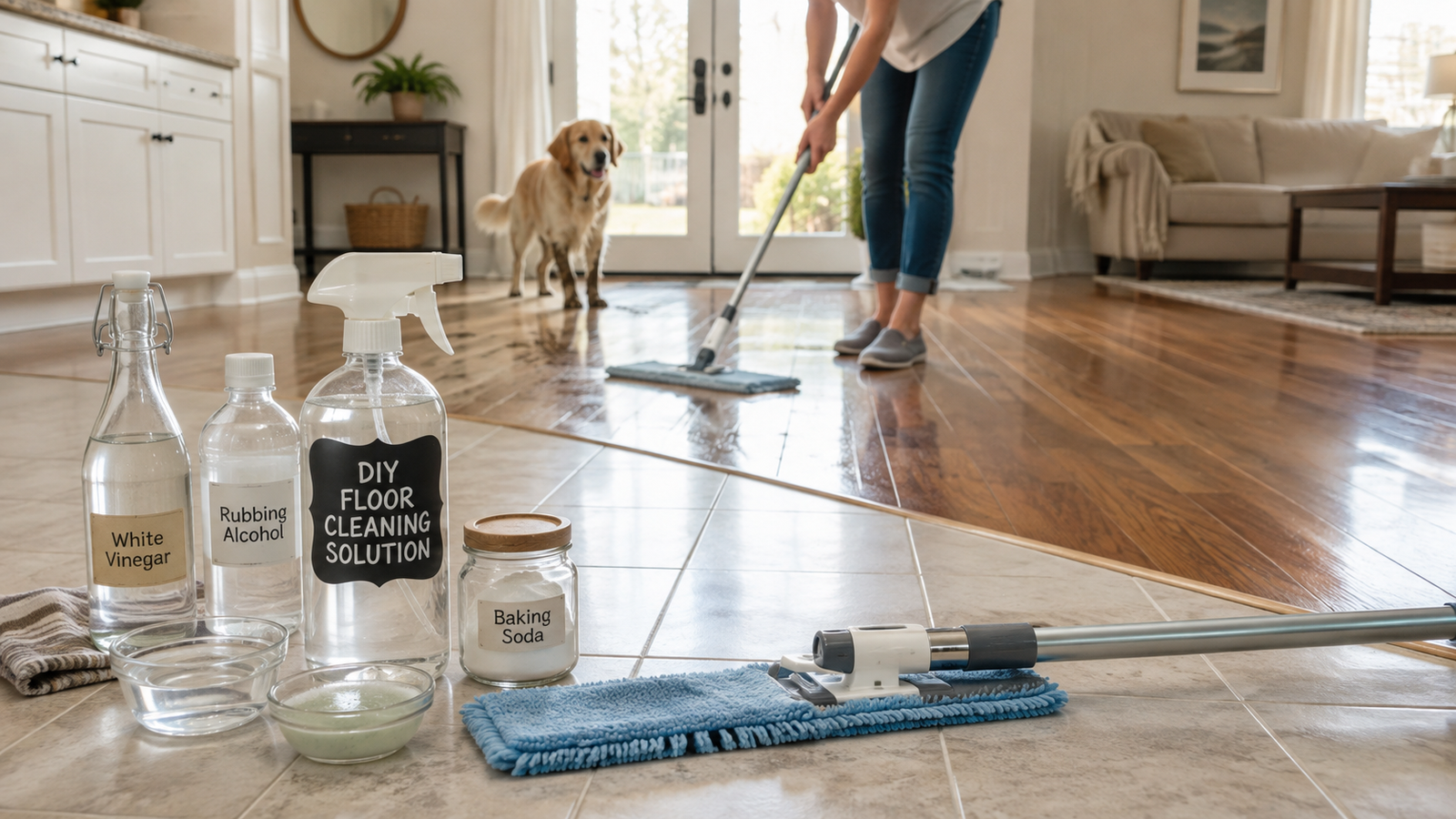
The back door is always home to my dog’s favorite place. With muddy paws and a straight path to that particular tile every time, usually about ten minutes after mopping the third occurrence happened last week. It was at that moment when holding the mop that I said to myself, “What am I doing spending money on this?” So I stopped. Instead, I went ahead and made my own “floor cleaning solution” and it was a surprisingly inexpensive mixture, given that this is a whole bottle of it that I make. Works the same. Maybe better, honestly, since I’m not breathing in whatever “fresh linen scent” actually means chemically.Tile, wood, vinyl, laminate and stone. You need to know which combo goes with which floor, because this is one of those areas where guessing wrong actually costs you. What You Need Vinegar. Rubbing alcohol. A basic dish soap, not the fancy kind. Warm water. A spray bottle or bucket. Microfiber mop if you have one, though a regular mop works too; it just doesn’t grab dirt the same way. Quick thing before anyone starts mixing stuff in their kitchen sink. Vinegar and castile soap are enemies. The acid in vinegar breaks the soap back down into raw oil, and that oil smears across your floor looking worse than whatever you were trying to clean up. I found this out the hard way, wiping the same four square feet of tile over and over, wondering what I’d done wrong. Answer: castile soap. Use regular dish soap instead. Problem solved. The Basic Recipe (Tile, Vinyl, Sealed Laminate) Two cups of warm water. Half a cup of vinegar. Quarter cup of rubbing alcohol. Add a few drops of dish soap. Shake in a spray bottle. Spray and mop one section and then move on to the next.No rinsing. Dries fast too, which matters if you’ve got kids who can’t be trusted to stay off a wet floor for more than ninety seconds. Add some lemon essential oil if you want; it cuts grease better than the floral stuff anyway. Ten drops is plenty. Hardwood Is Different and Less Forgiving Here’s the thing about wood floors. They hold a grudge. Too much water, too much vinegar, too often, and you’ll wear the finish down years before it should’ve worn down. One gallon of warm water. One tablespoon of dish soap. Small sections. Towel dry if you’re paranoid about standing water, which I am, because I’ve seen what happens otherwise. A teaspoon of olive oil brings a little shine back on sealed hardwood. A teaspoon. Not a tablespoon. Grout Is the Real Problem With Tile Everyone focuses on the tile surface. The surface isn’t the issue. It’s the grout lines where dirt hides and regular mopping does basically nothing. A half cup of baking soda mixed in a bucket of hot water, along with a few drops of dish soap added to the mixture. Scrub the surface using a mop as you would normally. If the grout is stained grey or more severely, use an old toothbrush dipped into the mixture to scrub the lines. The same floor cleaning solution can be used for the DIY bathroom cleaner as well. It removes soap scum and doesn’t scratch the surfaces like other abrasive powder cleansers kept in the cabinets underneath the sink. Marble and Stone: Leave the Vinegar Out of It One floor type where vinegar isn’t just unnecessary, it’s a mistake. Marble, travertine, any of those you name it, the acid will etch the surface. If it gets etched, you can’t buff your way back to shine. It is etched; etched for life, essentially. One gallon of lukewarm water, few drops of pH neutral detergent, and stir to barely suds. Damp mop only, not wet. No standing water on the surface ever. Dry it after cleaning, or you will have water marks burned on the surface tomorrow. Don’t Mix These, Seriously Bleach and vinegar together make chlorine gas. That’s not a small thing. Enough to irritate your eyes and lungs pretty fast in a closed bathroom, according to the CDC’s guidance on safe cleaning practices. Bleach and ammonia, same story, different gas. If you used a store-bought disinfectant recently, rinse the floor and let it dry completely before switching to anything homemade. Not worth the coughing fit. If you’d rather skip the DIY route entirely and just buy something with a safer ingredient list, the EPA’s Safer Choice program is a decent place to start looking before grabbing whatever’s cheapest on the shelf. Actually Mopping the Floor Sweep first. Or vacuum. Doesn’t matter which, just do one of them, because mopping over crumbs and pet hair just relocates the mess instead of removing it. Seems obvious written out like that, but I skipped this step for years. Wring the mop well. S pattern. Start at the far corner, work backward toward the door, not the reverse, unless standing on a wet floor while it dries sounds like a fun way to spend your afternoon.Our natural home cleaning tips page has some mop and bucket picks if you’re in the market for new tools to go with any of this. Grab whichever recipe fits your floor and try it this weekend. Worst case, you’re out maybe fifty cents in vinegar. Best case, that store-bought spray bottle sits in the cabinet collecting dust for good, which is honestly where mine’s been since March. FAQ Is it safe to make my own floor cleaner? For the most part. There’s only one guideline that truly counts: never mix bleach with vinegar or ammonia. Anything else is wide open for experimentation. Can I use the same homemade floor cleaner on all the floors of my house? It’s here that most people run into trouble. No. Vinegar’s great on tile and vinyl, terrible on marble, and not great long-term on waxed hardwood either. Match the recipe to the floor, not the other way around. How often should I mop? Once or
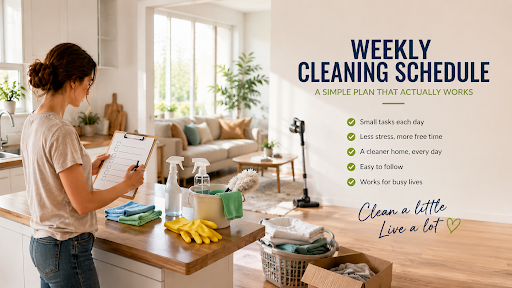
Weekly Cleaning Schedule: A Simple Plan That Actually Works
In the past I cleaned on Saturday. One day it all began to end, and it ate all the morning and made me grumpy for the afternoon as well. I was so bad at cleaning it took a ridiculously long time to see that the issue wasn’t that I sucked at it. Just one day off with a week’s worth of mess is a miserable day. A weekly cleaning schedule does that, as it breaks up the tasks into smaller ones that can be done throughout the week.Ten, fifteen minutes most days. No fancy supplies, no color-coded chart on the fridge that nobody actually looks at. Just tasks tied to specific days so the house never gets bad enough to dread. Why This Beats a Big Cleaning Day Dust and grime are honestly a lot easier to deal with fresh. Wipe a counter after a week of light use, and it’s thirty seconds. Let it sit for three weeks, and you’re scrubbing, maybe reaching for something stronger than soap. Bathrooms are the worst example of this; soap scum that gets touched weekly stays a quick wipe away. Ignore it for a month, and it’s a whole project with a scrub brush involved. There’s also just less dread involved. It’s a whole different experience to walk into a kitchen that was fifteen minutes ago yesterday vs one that has been a week since Tuesday. It doesn’t have to be clean. Just has to not be an issue. Your Weekly Cleaning Schedule, Day by Day Monday’s the kitchen, since it takes the most daily beating anyway: counters, stove, backsplash, a real scrub on the microwave (that splatter turns into a project fast if it sits), sink sanitized, trash out, and floor swept and mopped. Twenty minutes, give or take, less if meals got wiped up as they happened during the week. Tuesday moves to bathrooms. Toilet, tub, shower, mirrors, counters, floor, trash, and a quick check that there’s actually toilet paper under the sink. Fifteen minutes in a bathroom once there’s a rhythm to it. The first couple weeks take longer, since there’s usually some backlog to catch up on. Wednesday is a dusting day, and no one loves it, but everyone knows when it’s not. Shelves, frames, furniture, light switches, door handles (which are touched daily and cleaned very rarely), electronics screens, and ceiling fans Baseboards get rotated one or two rooms a week rather than all at once. Trying to do the whole house’s baseboards in one sitting is how people give up on baseboards entirely. Thursday’s floors.Vacuum, sweep and mop as necessary and, if time permits, under furniture where the real dust is. If that’s too much for a single evening, split it: Vacuum Thursday and mop Friday before the laundry starts. Friday is laundry day, in part so that clean sheets and towels can go into the weekend. Wash, dry, fold and (this is the part people forget to do) put away right after. A pile of folded but not put-away clothes in the corner for a week does much to lose the point. Saturday is bedrooms and closets, which get more time since they need more than a wipe. Tidy drawers, clear the nightstand, and vacuum under the bed, and if a donation bag happens, great, but it doesn’t need to be a full purge every single week. The lighter on purpose on Sunday. Catch up on anything that dropped, go through the refrigerator for anything that is out-of-date, and make the next week’s menu so that cooking doesn’t become another cleanup job. Five minutes walk-through, and that’s the week ended. What Makes a Weekly Cleaning Schedule Actually Stick Keeping supplies where they get used matters more than people expect. Bathroom cleaner under each bathroom sink beats one central closet down the hall, mostly because you’re more likely to actually reach for it. A kitchen timer set for fifteen minutes helps too; “clean the kitchen” as an open-ended task feels endless in a way that fifteen minutes on a clock just doesn’t. If there are kids around, hand them something simple. Counters, toy pickup, whatever fits. It keeps the week from resting on one person’s shoulders. And when a day gets missed, it will; that’s not a failure. Pick up wherever the schedule says is next, not wherever things got left off. Trying to squeeze three missed days into one evening is exactly the burnout this whole approach is supposed to avoid. A Few Questions People Ask How long does the whole week take, really? Most days run fifteen to twenty minutes. Saturday runs a bit longer. Add it up and it’s somewhere around two hours across seven days, which sounds small until you compare it to a four-hour Saturday marathon. What if there’s only time for a few days? Prioritize the kitchen and bathrooms; they get dirty fastest and matter most for actually feeling clean. Dusting and closets can slide a week without much fallout. A partial schedule kept up consistently beats a perfect one that gets abandoned by week three. Special products needed? Not really. All-purpose cleaner, glass cleaner, and a decent microfiber cloth. That covers almost everything here. Can the days be swapped around? Should be, honestly. This is a starting layout, not a rulebook. Some households do laundry on Sunday instead of Friday or split floors across two shorter sessions instead of one. Whatever fits the actual shape of your week is the right version; this is just a place to start from. Start Your Weekly Cleaning Schedule This Week A weekly cleaning schedule works because it’s small enough to actually keep up with. Fifteen minutes a day adds up to a lot less than four hours every Saturday, and somewhere in there the house stops being something to dread walking into. Begin with Monday’s kitchen, it’s the easiest to begin a habit around. Print it, put it where it will be seen, and wait 3 weeks to see if it is