On Tuesday last I ran out of spray cleaner, mid-wipe. Coffee grounds everywhere, dishes in the sink, and an empty coffee cup in my hand. It was a ridiculous thing to do to drive to the store for that. So I used the vinegar and some old spray bottles under the sink instead. Ten minutes, zero dollars spent, and the counter’s clean.
That’s really the whole appeal here: you already have most of a DIY all-purpose cleaner sitting in your kitchen; you just don’t know it yet. No store run. No ingredient list you need a chemistry degree for. No six-dollar bottle that’s basically water in a nicer bottle than yours.
What You Actually Need
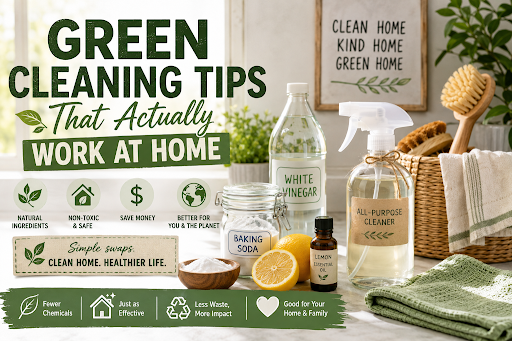
Not much. That’s the whole list, more or less. No hunting three stores for borax like some recipes want you to. Vinegar’s the acid doing the actual work it’s what cuts grease, soap scum, and hard water spots on your faucet. Water’s just there to keep it from smelling like a salad every time you wipe a counter down.
The Recipe I Actually Use
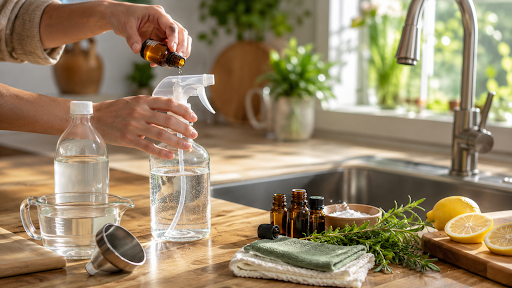
Add 1 cup of water, 1 cup of white vinegar and 10 drops of essential oil (if desired) to a spray bottle. Pour in the water, then the vinegar, then the oil, and then shake it.That’s it I know it sounds too simple to work, but it does. My kid made a batch of this by herself last month. She’s eight.
A grease-cutting version: Plain vinegar water doesn’t always cut it once your stovetop’s seen a few weeks of real cooking, though. For that, toss in a teaspoon of dish soap it grabs onto grease in a way vinegar just can’t on its own, and the two together will get through a grimy oven door without you needing to scrub like you’re mad at it.
Where You Should Never, Ever Use This
Okay, this part actually matters, so stick with me a second. Vinegar and natural stone don’t mix, though. Granite, marble, limestone, travertine keep spraying vinegar on that stuff and eventually the finish dulls, clouds up, sometimes etches outright. Will one accidental spritz ruin your counter tonight? No. But it’s your call whether that’s a risk worth taking on something you paid a few thousand dollars for.
Got stone counters? Warm water and a drop of dish soap that’s your move there.
Essential Oils, If You Want Them
Straight vinegar smells like vinegar. It fades fast once it dries, but I get it some people can’t stand cleaning with that smell hanging in the air.
Lemons and oranges get picked most often; they’re bright, clean-smelling, and they’ll even chip in a little grease-cutting of their own. Lavender’s the calmer option and works well in a bathroom. Tea tree oil has that sharp, almost medicinal smell for some reason people love it specifically in laundry rooms. And keep it away from cats essential oils and cats really don’t mix. Tea tree oil especially isn’t safe for them, even in tiny amounts.
Shelf Life and Storage
Before you need to make a new batch, it is around three to six months. The product doesn’t go bad as food will, but the scent will fade, and so will some of the cleaning power. Store the bottle under the sink or in a cabinet, out of sunlight as UV rays destroy essential oils quickly.
Around the House
Kitchen: counters, the outside of the fridge, cabinet fronts, a cooled-down stovetop. Skip cast iron and stone. For everything else, spray it, let it sit a second on the stubborn spots, wipe dry.
Bathroom: soap scum on shower walls, the outside of the toilet, sink, mirrors too though for mirrors, grab newspaper instead of paper towels if you want to skip the streaks. Paper towels and mirrors are a bad combo; you’ll be redoing it twice
Here’s a spot most people skip entirely: door handles, light switches, and remote controls. They get touched constantly and cleaned almost never. Thirty seconds a week fixes that.
Is It Actually Cheaper Than Store-Bought?
Indeed, in fact, it is much cheaper. A branded spray bottle costs between five to seven dollars then costs approximately four dollars per gallon of white vinegar which gives you around sixteen similar bottles.Do that math over a year of cleaning, and it adds up fast.
There’s also the ingredient thing: no vague “fragrance” hiding a chemical blend on the label, no dyes, nothing you need a chemistry degree to identify. If you’ve got kids or pets rolling around on floors right after you mop, I don’t know, that just feels better.
That said, store-bought isn’t obsolete. If you actually need to disinfect against something flu season, after handling raw chicken you want a product registered with the Environmental Protection Agency for that job specifically.
Just Try It This Week
Skip the store run. Grab the vinegar you’ve already got, an empty bottle, and five minutes you weren’t using anyway. Once your DIY all-purpose cleaner handles your counters and mirrors and sinks just fine, that store-bought bottle under your sink is probably going to sit there a lot longer than it used to.
I switched over almost a year ago now, mostly by accident, and I haven’t gone back. Not because I’m precious about it if I run out of vinegar mid-week, I’ll still grab whatever’s on the shelf at the store. It’s just that most days, this is the easier option, not the harder one. That’s the part people get wrong about “natural” cleaning. It’s not a chore. It’s actually less of one.
FAQ
Is a DIY all-purpose cleaner as good as store-bought?
For regular dirt and grease, honestly, yeah, pretty much. Where it falls short is disinfecting—flu season, after touching raw chicken, that kind of thing.
Can I use it on wood floors?
Sealed wood, sure, but go easy on it. Older or unsealed floors don’t love repeated vinegar exposure; they can warp or dull over time. A barely-damp mop is the safer bet there.
How long until it spoils?
While it won’t necessarily “spoil,” it would be wise to make up a new batch of this solution every three to six months since the smell disappears sooner than the cleaning ability does…
I can’t stand the vinegar smell now what?
Essential oil, ten drops a cup, whatever scent you’re into. Lemon, lavender, orange it doesn’t matter. And honestly the smell fades within a couple minutes of drying anyway, so it’s not even that big a deal in the end.