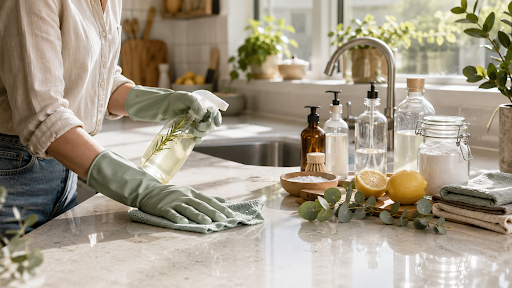
Open the cabinet under your sink.Odds are decent. One of those bottles has a warning label “harmful if swallowed,” “avoid contact with skin,” something in that family. That’s usually when people start eyeing the non-toxic stuff instead. Not because it’s trendy. Because nobody wants to hold their breath while scrubbing a tub.
We got there the hard way, if I’m honest. One of us cleaned the bathroom, sat down for dinner, and still had a scratchy throat two hours later. That was it. Last straw.
So we spent a few months running a pile of non-toxic cleaning products through our own kitchen and bathroom. A few earned a permanent spot under the sink. Most got tossed after one use. What’s below is just what survived nothing lifted from a press release.
What “non-toxic” actually means
The not so good news: “non-toxic” is not a term of law. It can be printed on a bottle by any company and no one checks.That’s how some cleaner with a leaf on the label ends up listing the same harsh stuff as the yellow bottle sitting next to it.
A true non-toxic cleaning product doesn’t contain ammonia, chlorine bleach, phthalates or synthetic fragrance and uses common words to identify ingredients on the label or on the website. If a company is not willing to tell you what is in there, then that’s your answer.
The benefits of a change of language.
Why it’s worth switching
Your kitchen counter doesn’t need something strong enough to strip a garage floor. The EPA has found indoor air often carries more pollution than the air outside, and cleaning sprays are a big part of why every time you spray a harsh cleaner, some of it hangs in the air of a closed room, and you breathe it in.
Kids and pets feel this more than we do. They’re at a lower level and their hands go in their mouth more than ours do. The mopped floor is not a safe place for a toddler to crawl across, as it is for the adult holding the mop.
Cleaning your home with green products doesn’t mean you have to make the rooms dirtier. It simply means that the breathing air is not a hazard after breathing.We noticed the difference most in small rooms with no window, a half bath, say. A strong cleaner in a room like that lingers for an hour. Vinegar clears out in a few minutes.
The non-toxic cleaning products we’d actually buy again
We didn’t rank these by price or packaging. We ranked them by one question: Did it clean the mess?
Seventh Generation Lemon All-Purpose The cleaner handled everyday counter grime without leaving a film. Get the unscented version if anyone in your house gets headaches from strong smells it’s fragrance-free.
Branch Basics Concentrate surprised us.One bottle can become an all-purpose spray, bathroom cleaner and laundry booster, so you’re not carrying five bottles for five chores! It is more expensive at the cashier but goes a long way.
Puracy Multi-Surface Cleaner did the job of removing dried spaghetti sauce off a stovetop with a minimum of scrubbing. Great choice for those who don’t want to work up a sweat while cleaning up.
The old school choice is Bon Ami Powder Cleanser which is still effective for cleaning sinks and tubs. No dye, no fragrance, and it’s been around since 1886 the formula’s had time to prove itself. It’s also one of the cheapest natural cleaning products here, by a wide margin.
Common Good All-Purpose Spray is the one to grab if plastic waste bothers you as much as the chemicals do. It is packaged in glass and low-plastic pouches for refills are to be mixed with water by the user. It performed as good as Seventh Generation, but in the end, it was the packaging.
For a quick list, here are these 5 to cover the kitchen, bathroom and laundry.
How to make your own non-toxic all-purpose cleaner
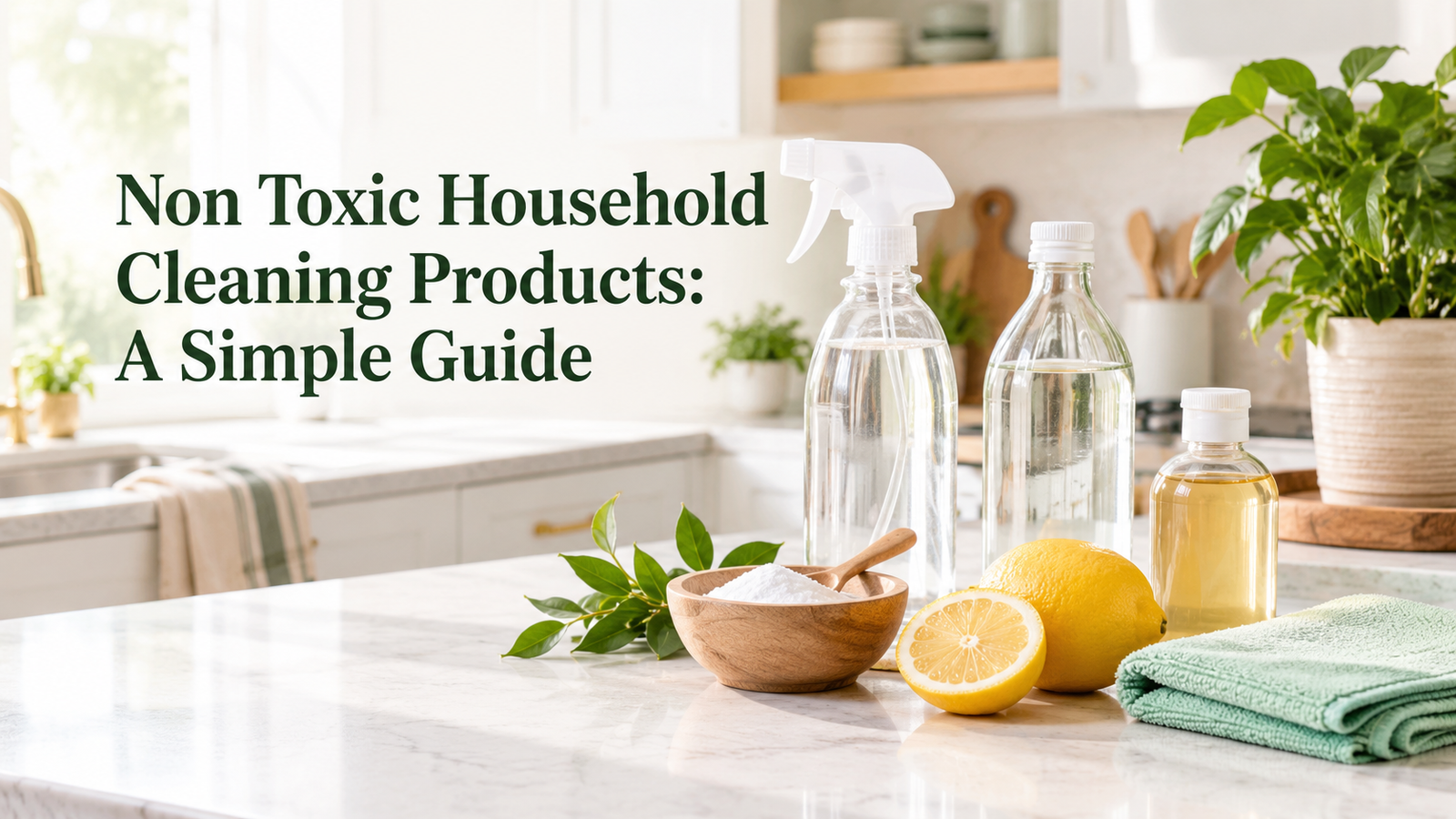
If you feel that buying an entire bottle of something seems excessive, try concocting a basic recipe for a homemade all-purpose cleaner using things you already have around the house – one cup of water, one cup of white vinegar, and ten drops of lemon or tea tree essential oil in a spray bottle.
This solution works great for counter tops, sinks, and most sealed surfaces except for granite and marble the acid in this cleaner erodes the sealant over time.
This is basically the same as Bon Ami just without the label.
Labels to trust and labels to skip
“Natural,” “green,” “eco” none of those words mean anything, legally. A bottle can slap all three on the front and still be full of the same stuff as whatever’s already under your sink.
Look for EPA Safer Choice or USDA Certified Biobased instead, or just check if the company bothers to list every ingredient on the label or their website. The Environmental Working Group has a database where you can search a product by name and see how it actually rates worth thirty seconds before you buy something new.
A simple non-toxic cleaning checklist
You don’t need to replace everything in your cabinet this weekend. Start with what you touch most:
- Kitchen counters and cutting boards: switch these first, since food actually touches the surface.
- Bathroom; switch next. Small room, usually bad airflow.
- Laundry: detergent residue sits against your skin all day, so this one’s worth an early switch too.
- Floors: save these for last, since most floor cleaners are already fairly mild anyway.
Use up what’s left of your old cleaners on outdoor jobs the garage floor, trash cans instead of pouring them down the drain.
For a full room-by-room routine, check out our non-toxic cleaning products for the home checklist. Same deal: tested in an actual house, not a lab.
The bottom line
You don’t need twelve bottles under your sink. A solid all-purpose cleaner, a scouring powder, and a bottle of vinegar handle most of what a house throws at you. Start with one swap this week, whatever’s closest to running out and build from there.
Want the full breakdown of everything we tested and sent back? Our guide to the best non-toxic cleaning products has the complete list, updated as we test new brands.
FAQ
Are non-toxic cleaning products actually effective?
Yes, the good ones are. Branch Basics and Puracy cleaned everyday messes just as well as standard cleaners in our tests.
Is vinegar a good non-toxic cleaner?
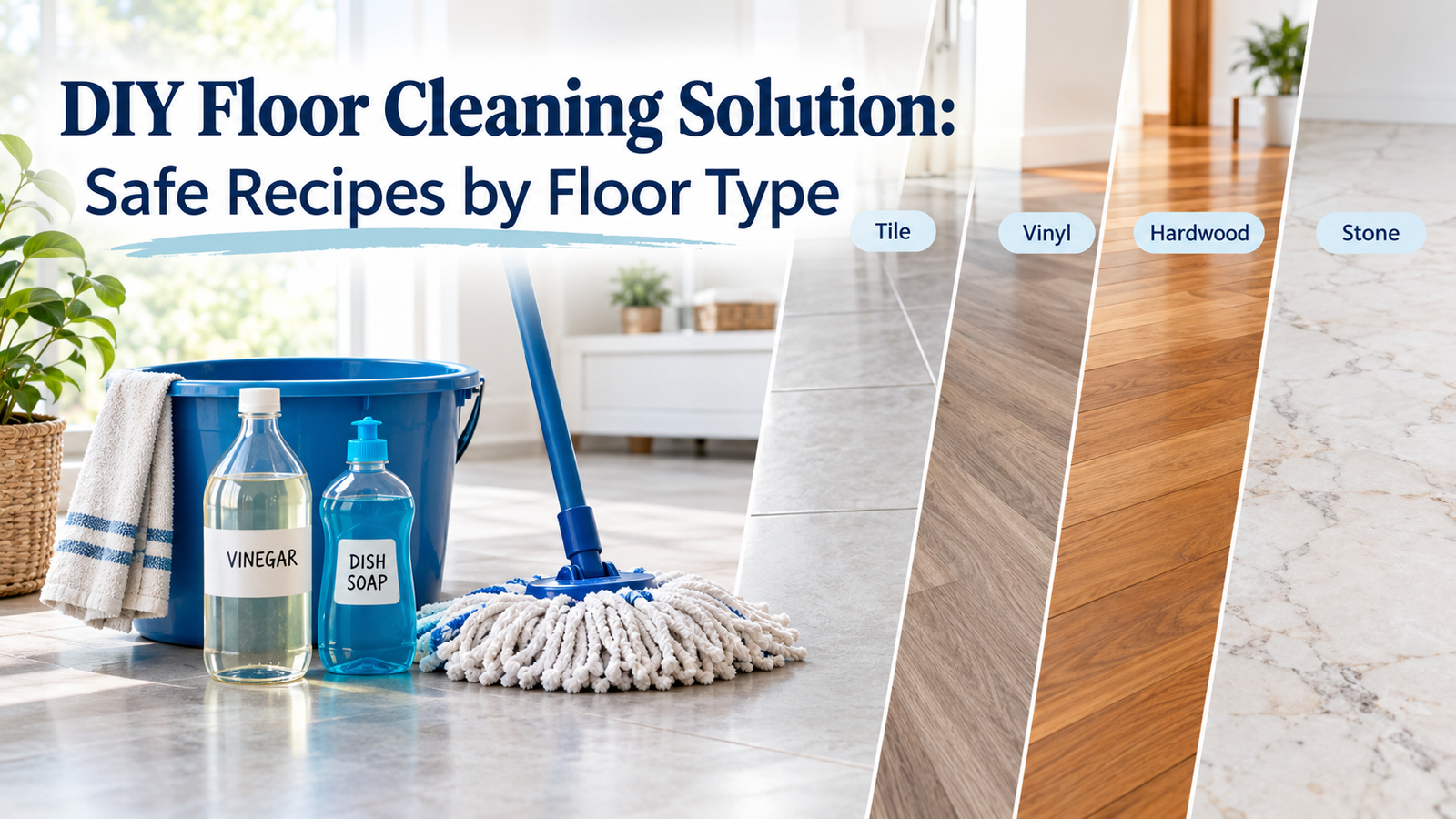
Yes glass, counters, sealed surfaces, all fine. Just skip granite, marble, and hardwood. The acid wears the finish down eventually.
What ingredients should I avoid?
Ammonia, chlorine bleach, phthalates. And watch for “fragrance” on its own that one word can be standing in for a dozen chemicals the company never has to name.
Are non-toxic cleaners safe for pets?
Mostly, yes, especially if there’s no synthetic fragrance in it. But keep anything, even the “safe” stuff off surfaces your pet’s going to lick right after, and give sprays time to fully dry before you let them back in.